
Last updated November 21, 2026
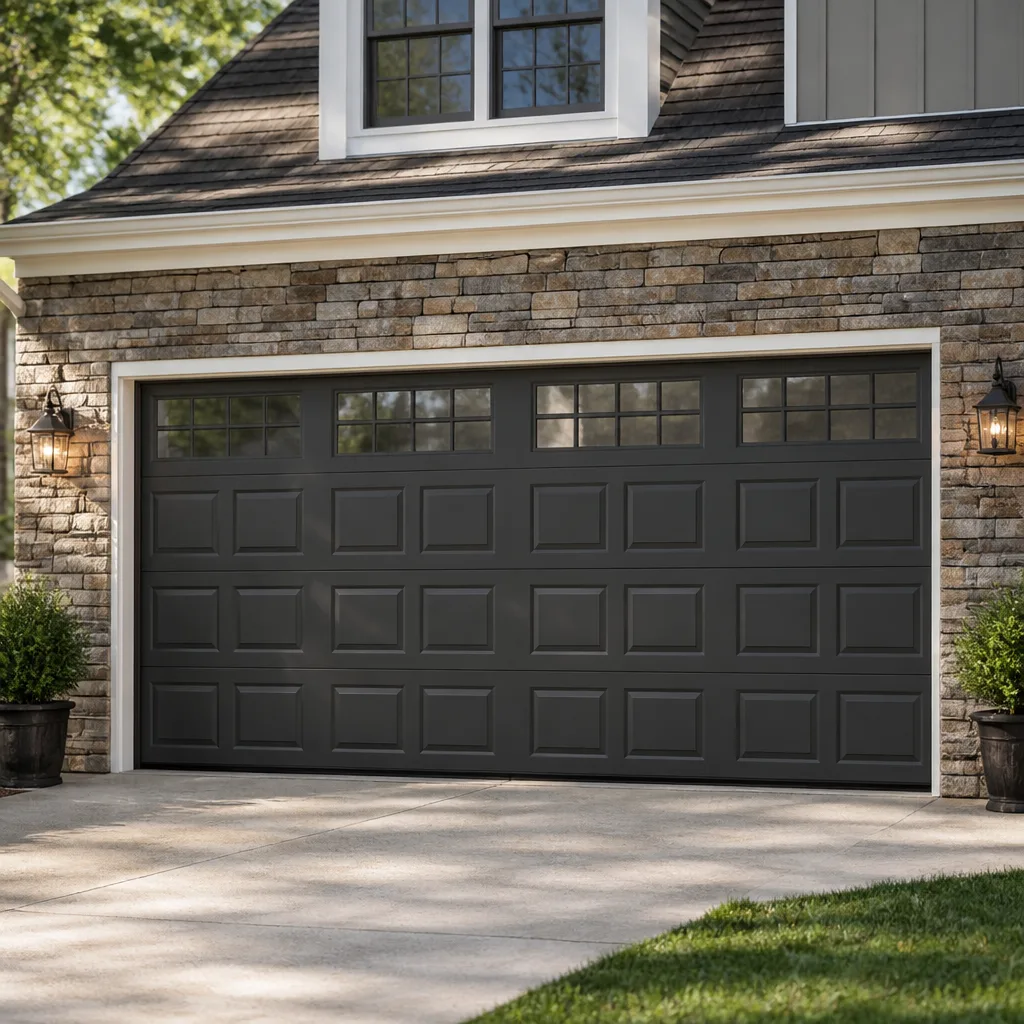 Raised-panel steel
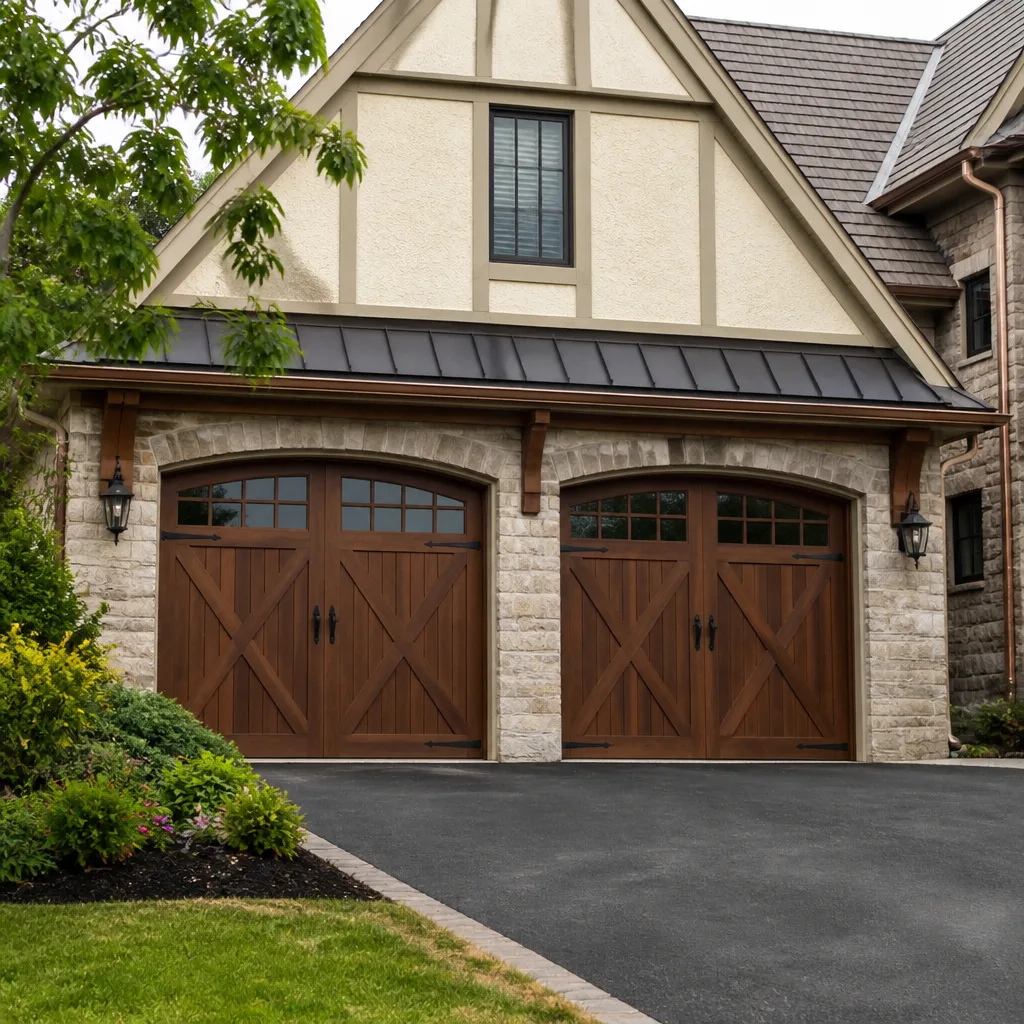 Carriage house
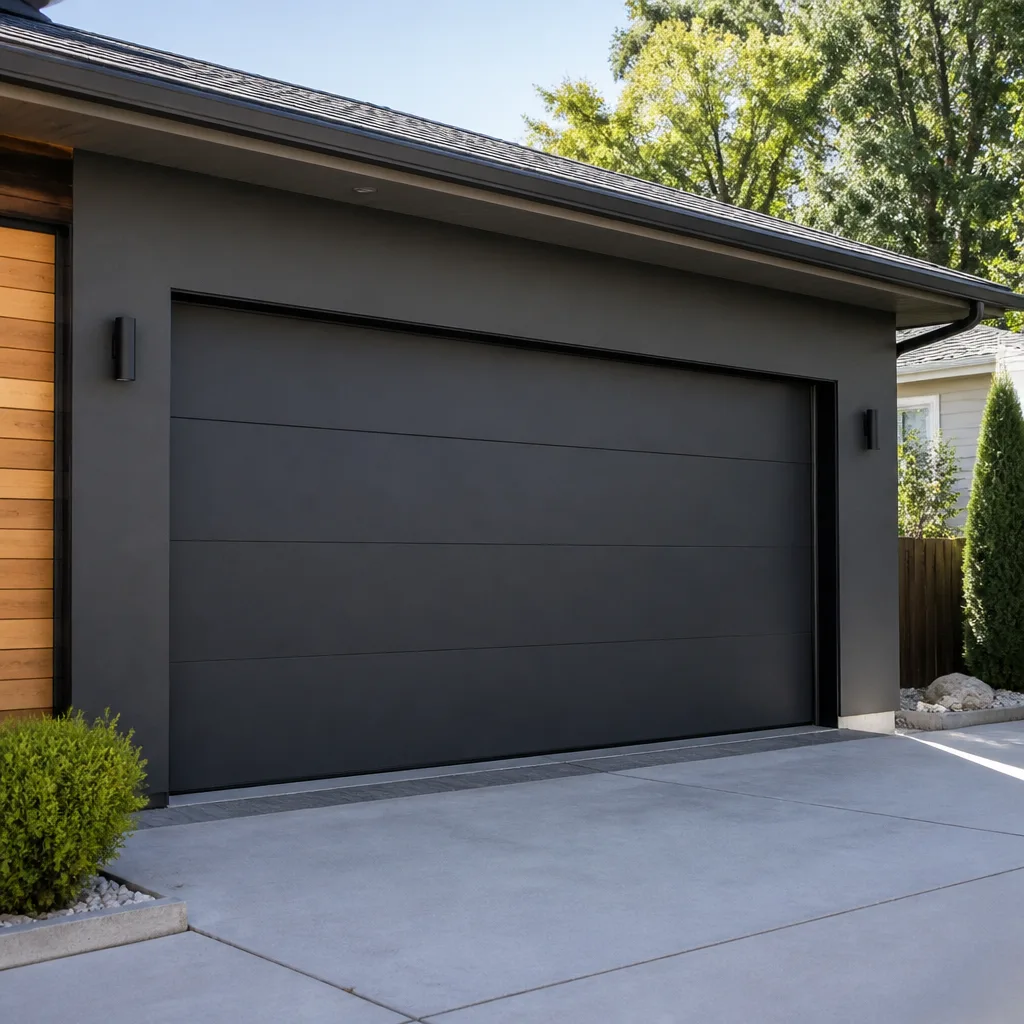 Modern flush
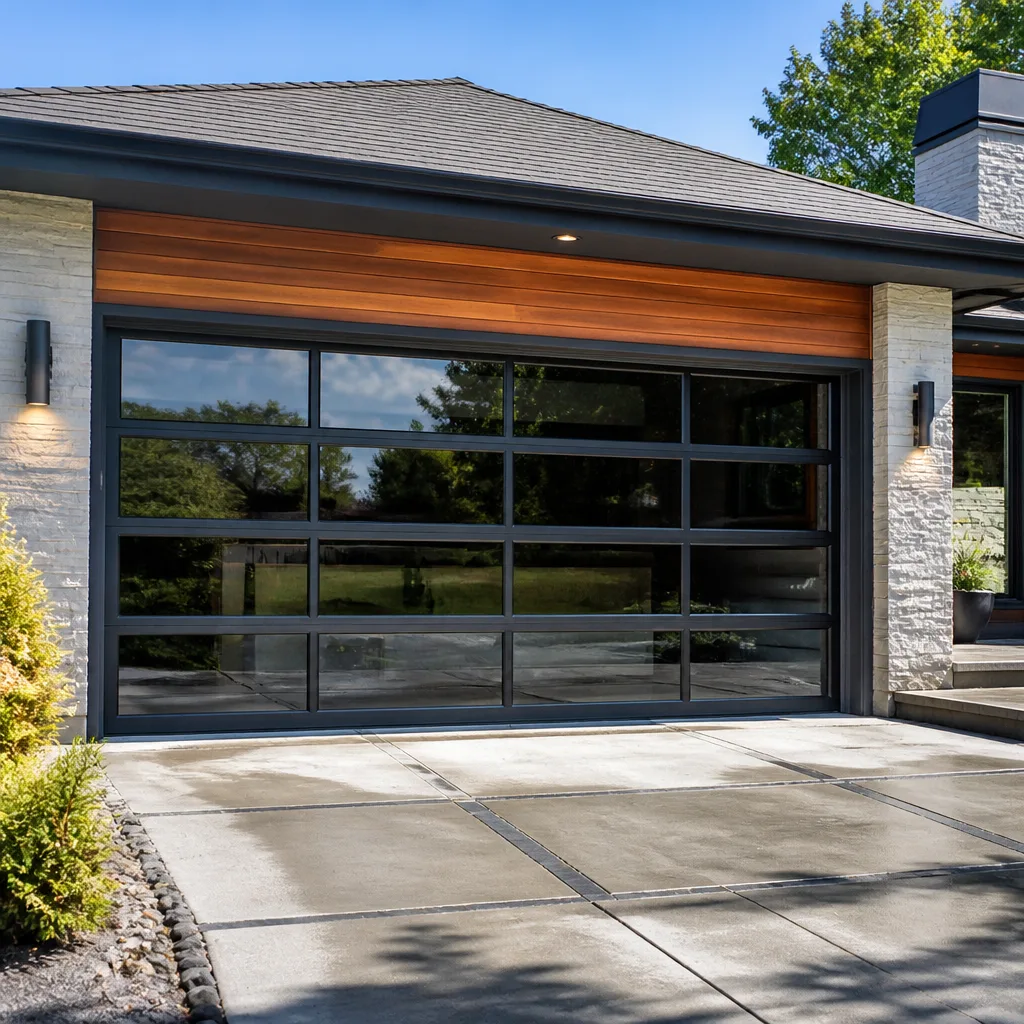 Full-view glass
 LiftMaster openers
 Chamberlain openers
Full 25-point door and opener safety check with every visit - springs, cables, rollers, tracks, and your LiftMaster or Chamberlain opener included
You get a price before we start. It does not change when the pro arrives.
Get your free estimateGarage Door Repair Maintenance Checklist for Tallahassee Homeowners
If your maintenance checklist doesn’t account for what happens to torsion spring tension after a Tallahassee summer, you’re checking boxes that don’t protect you. Most garage door checklists floating around online were written for a generic climate: lubricate twice a year, tighten the bolts, listen for squeaks. That advice isn’t wrong, but it’s incomplete for North Florida, where months of heat and heavy humidity change which parts fail first and which ones need attention in January versus July.
What follows is a working checklist built around Tallahassee’s actual weather calendar. You’ll learn which months matter most for which tasks, which lubricants hold up in humidity and which break down, how to read rust on your springs and hinges, and clear pass/fail criteria so you know when to keep monitoring and when to stop and call a technician.
Quick Answer
A garage door maintenance checklist for Tallahassee should be timed to the local weather, not the calendar year: check balance and lubricate in spring before the wet season, inspect for rust and seal damage at the end of summer, and test safety sensors and safety reverse every month without exception. Springs, cables, and bottom seals are the parts most affected by Tallahassee’s humidity, so those get more frequent inspection than the rest of the door. Any broken spring, frayed cable, or door that won’t reverse on contact is a call-a-professional item, not a wait-and-watch item.
Styles & brands we work with
- Raised-panel steel
- Carriage house
- Modern flush
- Full-view glass
- LiftMaster openers
- Chamberlain openers
Table of Contents
- Why Tallahassee’s Climate Changes the Checklist
- The Month-by-Month Task Calendar
- Lubrication: Which Products Survive the Humidity
- Rust Inspection Protocol for Springs, Drums, and Hinges
- Bottom Seals and Weatherstripping: Moisture and Insects
- Monthly Safety Tests You Can Do Yourself
- Pass/Fail Criteria: Monitor vs. Call a Technician
- Brand-Specific Maintenance Notes
Why Tallahassee’s Climate Changes the Checklist
Garage door hardware responds to temperature and moisture, and Tallahassee delivers both in long stretches. Summer heat expands metal and softens rubber seals. Weeks of high humidity keep bare steel constantly damp. Then the seasons shift, and the hardware that sat unwatched all summer announces itself in the fall.
That rhythm matters because the parts that fail here don’t fail in the order a generic checklist predicts. Torsion springs under sustained heat can lose tension gradually, so a door that opened smoothly in March feels heavy by September. Bottom seals soften and pull away from the concrete. Hinges, which carry very little load but sit exposed at every joint, are usually the first place rust appears.
Two local realities shape the timing further:
- Summer is the storm season. Pre-season preparation on the door, tracks, and seals matters more in a region where summer storms roll through regularly. Loose hardware that rattles all winter becomes a real problem when wind pressure pushes against a door.
- The wet-season humidity peaks before the cooler months. Hardware checked in late spring catches issues before they sit through months of damp. A hardware inspection at the end of summer catches whatever the season wore down.
If you own a door with a painted steel panel, the finish matters here too. Chips and scratches that would be cosmetic elsewhere become rust starting points in Tallahassee humidity. That’s a five-minute touch-up job now and a panel replacement later.
The Month-by-Month Task Calendar
Rather than “twice a year,” here’s how a Tallahassee maintenance year actually breaks down. You don’t need to do every task every month, but each task lands in the window where it does the most good.
- Late winter (February – March): Full balance test, hardware tightening, and spring inspection. Cooler, drier weather is the easiest time to spot rust on springs and cables, and it’s your window to catch tension problems before summer stress.
- Early spring (March – April): Pre-storm-season check. Clear tracks, test safety reverse and sensors, inspect bottom seal for cracks, lubricate rollers, hinges, and springs, and confirm the auto-reverse works on contact with an object.
- Early summer (May – June): Light monthly checks. Run the sensor test, look for fresh rust blooms on hinges and drums, and listen for new noises. High heat softens seals, so a visual pass over the bottom seal each month catches lifting early.
- Late summer (August – September): Post-summer hardware inspection. Recheck spring tension by lifting the door manually and confirming it holds at halfway. Look at hinge joints and cable drums for rust. Check that weatherstripping still seals.
- Fall (October – November): Full inspection and seal refresh. Replace worn bottom seals or weatherstripping before cooler, drier air arrives. Tighten all hardware, check rollers for flat spots, and test the opener’s force and travel limits.
- Winter (December – January): Balance and lubrication again. Cooler cycling stresses springs as they contract, and the door’s balance is the single best early indicator of a spring that’s on its way out.
If you’d rather have a professional handle the full annual inspection, our garage door repair team can assess the whole system in one visit.
Lubrication: Which Products Survive the Humidity
Lubricant choice changes in Tallahassee. In drier climates, almost anything works. In a humid environment, cheap lubricant is worse than none: it attracts dust, thins with heat, and slings off the moving parts it was supposed to protect.
What holds up here:
- Silicone spray or a lithium-and-silicone blend works well on hinges, rollers, and tracks. Silicone resists moisture and doesn’t gum up the way grease can.
- White lithium grease is fine for hinges and rollers, but it can attract dust and grit on a dusty track. Apply sparingly.
- Spring lubricant designed for torsion springs, or a light general-purpose lubricant sprayed lightly, helps. Avoid heavy grease that collects grit at the coil.
- Avoid WD-40 as a long-term lubricant. It’s fine for loosening rusted hardware, but it isn’t a lasting lubricant and doesn’t stand up to a humid garage.
Two more points on application. First, apply lubricant when the hardware is at its driest, not in the middle of a wet week, so it can set. Second, don’t spray the opener’s motor housing or the safety sensor lenses, only the moving mechanical parts. Door brand matters less than lubricant here; Craftsman, Raynor, LiftMaster, and Chamberlain doors all use the same basic mechanical systems.
Which lubricants wear out fastest
Petroleum-based grease and spray-on oils thin noticeably in summer heat and then attract the fine grit that a humid garage always has. That combo – thinned grease plus grit – can actually accelerate wear on roller bearings and hinge pins. Silicone-based products hold their viscosity better across the heat and humidity changes Tallahassee sees.
Rust Inspection Protocol for Springs, Drums, and Hinges
This is where Tallahassee climate leaves its signature most visibly. Rust appears in a predictable sequence, and catching it early saves real money.
- Inspect the torsion springs first. Look for powdery orange residue, pitting, or flaking paint at the base of the coil. A slight surface rust is cosmetic. Pitting and flaking mean the spring is degrading and worth a professional assessment.
- Check the cable drums at the top of the door on each side. Look where the cable wraps around the drum: any rust at the cable-drum contact point is a concern because the two surfaces wear against each other.
- Inspect every hinge joint. Hinges sit on the panel edges where moisture sits longest. A hinge with rust-colored dust at the pin is your first warning. Rust through a hinge plate means replace it now.
- Look at the rollers. Nylon rollers don’t rust, but steel rollers and their stems do. If the roller stem has orange buildup, replace that roller.
- Check the bottom bracket and the section between panels at floor level. Ground-level steel sees the most moisture.
Use a pass/fail approach: light surface rust where you can wipe it away with a cloth is a monitor item, but rust that pits the metal or flakes off, or that has frozen a hinge or roller in place, is a call-a-professional item. Rust on a cable is always a call. A frayed or rusting cable can snap and is among the most dangerous failures a garage door can have.
Springs are the most dangerous part of your garage door, and the balancing act they perform under tension is not a do-it-yourself repair. If a spring inspection turns up anything beyond surface discoloration, stop and call in a technician. When the problem is spring-related, our garage door spring repair service is built specifically around this job.
Bottom Seals and Weatherstripping: Moisture and Insects
In North Florida, the bottom seal does double duty: it keeps moisture out and it keeps insects and small animals out. A worn bottom seal on a Tallahassee door lets in both.
What to check, and when:
- Visual check monthly. Look for tears, flattening, or gaps between the seal and the concrete. A seal that’s visibly crushed along its whole length needs replacing.
- The paper test. Close the door on a dollar bill or sheet of paper at three points along the floor – left, center, right. If the paper slides out freely, there’s a gap and either a seal replacement or a track adjustment is due.
- Insect intrusion patterns. Small gaps at the bottom corners are the most common entry point for insects and the occasional lizard. If you’re finding them consistently near the corners, check the side seals and the bottom corner seal, not just the middle.
- Moisture check. After a heavy summer rain, look for damp concrete or a wet streak below the door. That means the bottom or side seal isn’t seated.
- Weatherstripping on sides and top. Run a hand along the side weatherstrip. If it’s brittle or pulling from the jamb, it’s letting in both air and moisture.
Replace a bottom seal when it’s torn, hardened, or shows a persistent gap after adjusting the down-limit. Side and top weatherstripping typically lasts several years but should be checked each fall.
Monthly Safety Tests You Can Do Yourself
These two tests are the most important maintenance you can do on your own, and they take about two minutes. Do them once a month, year-round, in every season.
- The safety reverse test. Place a 2×4 flat on the ground at the center of the door opening. Close the door using the opener’s wall control or remote. The door should stop and reverse when it contacts the board. If it doesn’t reverse, that’s a fail: stop using the opener and call a technician.
- The photo-eye sensor test. With the door fully open, break the beam between the two safety sensors on either side of the opening with your hand or a piece of cardboard. The door should not close (or should reverse immediately if it’s already closing). If it closes anyway, the sensors need adjustment or replacement.
Add these lighter checks to your monthly pass:
- Balance test: disconnect the opener and lift the door manually to about halfway. It should hold its position. If it drops or rises on its own, the springs are out of balance and need professional attention.
- Listen for new sounds: grinding, popping, or rhythmic clicking signal a problem.
- Look for rust blooms on hinges and drums at least once a month during summer.
What a failing safety reverse looks like
Usually nothing dramatic. The door closes and then pauses, or reverses slowly, or fails to reverse at all. Sometimes the opener’s force limit is set too high, which masks the problem. The opener is doing the sensing but the door’s mechanical travel is what triggers the reversal. If a sensor test passes but the reversal test fails, the down-limit or force setting is the likely culprit, and that’s a professional adjustment.
Pass/Fail Criteria: Monitor vs. Call a Technician
This table is the core of the guide. Use it to decide whether a finding is a “note it and move on” or a “call someone.”
- Loose bolts or hinges: Tighten and recheck next month. PASS. | Hinge pulled loose from the panel or stripped threads: CALL.
- Surface rust on a hinge or spring: Wipe and check again in a month. MONITOR. | Rust that pits metal, flakes, or freezes a hinge or roller: CALL.
- Spring: Slight paint wear, door still balanced: MONITOR. | Broken spring, door heavy to lift, door slams down, or visible gap in the coil: CALL immediately.
- Cable: Intact and taut: PASS. | Any fraying, rust, or slack: CALL. Never adjust a cable yourself.
- Bottom seal: Minor compression: MONITOR. | Tear, gap, hardening, or paper-test failure: REPLACE (a task a tech can handle during a repair or tune-up).
- Rollers: Smooth, quiet: PASS. | Flat spots, wobble, or rust: REPLACE.
- Safety reverse or photo-eye fail: Any fail on either test is a CALL. Don’t keep using the door until it’s fixed.
- Opener: Consistent travel and speed: PASS. | Reversing randomly, force-limit lights blinking, remote not responding: CALL for garage door opener repair.
- Door balance: Holds at halfway: PASS. | Drops or rises when let go: CALL. This is almost always springs or cables.
Tracks are worth a note: a dented vertical track that causes the door to bind is a professional fix, not a hammer-it-out job. And any time you see a bent or kinked track, stop using the door until it’s assessed.
Brand-Specific Maintenance Notes
Most garage door maintenance is brand-agnostic: the same spring, hinge, roller, and seal checks apply across the board. But opener maintenance touches brand-specific behavior, and it’s worth knowing what’s normal on your system.
LiftMaster openers use the MyQ system for app control and alerts. Chamberlain openers share engineering with LiftMaster, and their newer smart models use the same app and WiFi pairing. Craftsman openers use a similar control scheme on many models. Raynor and other door brands are treated the same way mechanically: check panels, springs, cables, and seal. For any opener, keep the force and travel limits checked annually as part of fall maintenance.
Two practical notes. First, don’t chase opener settings by trial and error: the force limit and travel limit are adjustments that protect the whole mechanism, and a wrong setting can cause the door to close too hard or not close fully. Second, if your opener is a smart model and you’re seeing app disconnects during summer storms, the fix is usually the WiFi pairing or firmware, not the door. Our team services openers from LiftMaster, Chamberlain, Genie, Craftsman, and other major brands, and handles doors from LiftMaster, Chamberlain, Genie, Clopay, Amarr, Wayne Dalton, Craftsman, and Raynor.
If your door is due for replacement rather than repair, the maintenance logic changes: a new door’s springs and seals should be checked after the first year, then annually. You can learn more about the right door for your home on our garage door installation page.
Common Mistakes to Avoid
- Running a full checklist in the wrong season. Deep inspections belong before storm season and at the end of summer, not in the middle of the wettest weeks when humidity masks small problems.
- Using WD-40 or grease as a long-term lubricant. It thins in Tallahassee heat, collects dust, and does less than a silicone spray that stays put.
- Ignoring the bottom seal until insects find it. In North Florida, a degraded seal is both a moisture problem and an insect entry point, and small corner gaps are the first thing to appear.
- Adjusting the opener’s force limit to make a failing door close. That adjustment hides a balance problem and stresses the mechanism. Fix the door, not the symptom.
- Tightening springs or cables yourself. These are high-tension parts, and a cable or spring that lets go under load causes serious injury. Leave them to a technician.
- Waiting for a full failure before calling. A door that grows heavier over a summer is a warning. A door that won’t reverse is an immediate call.
- Skipping the quarterly hinge check. Rust on hinges is the highest-frequency problem we see in Tallahassee, and it’s the cheapest to fix early.
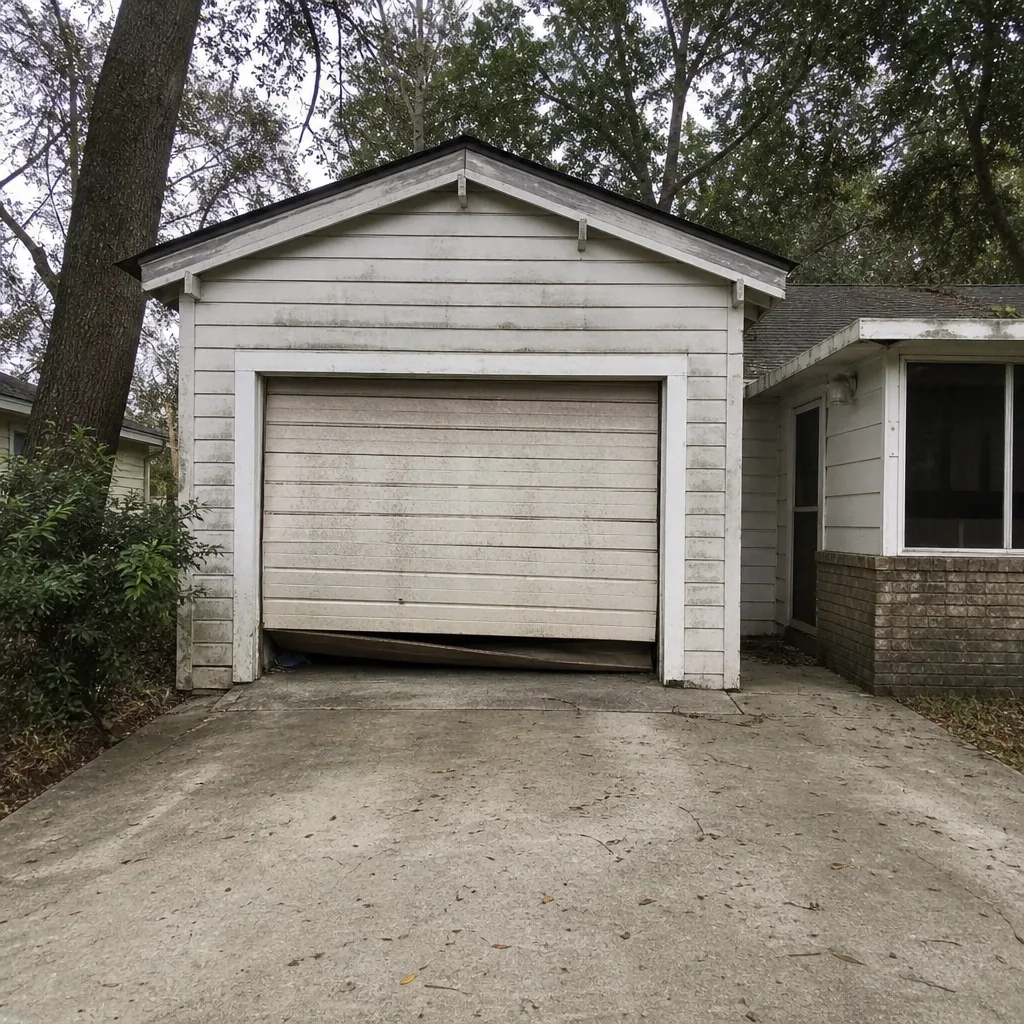
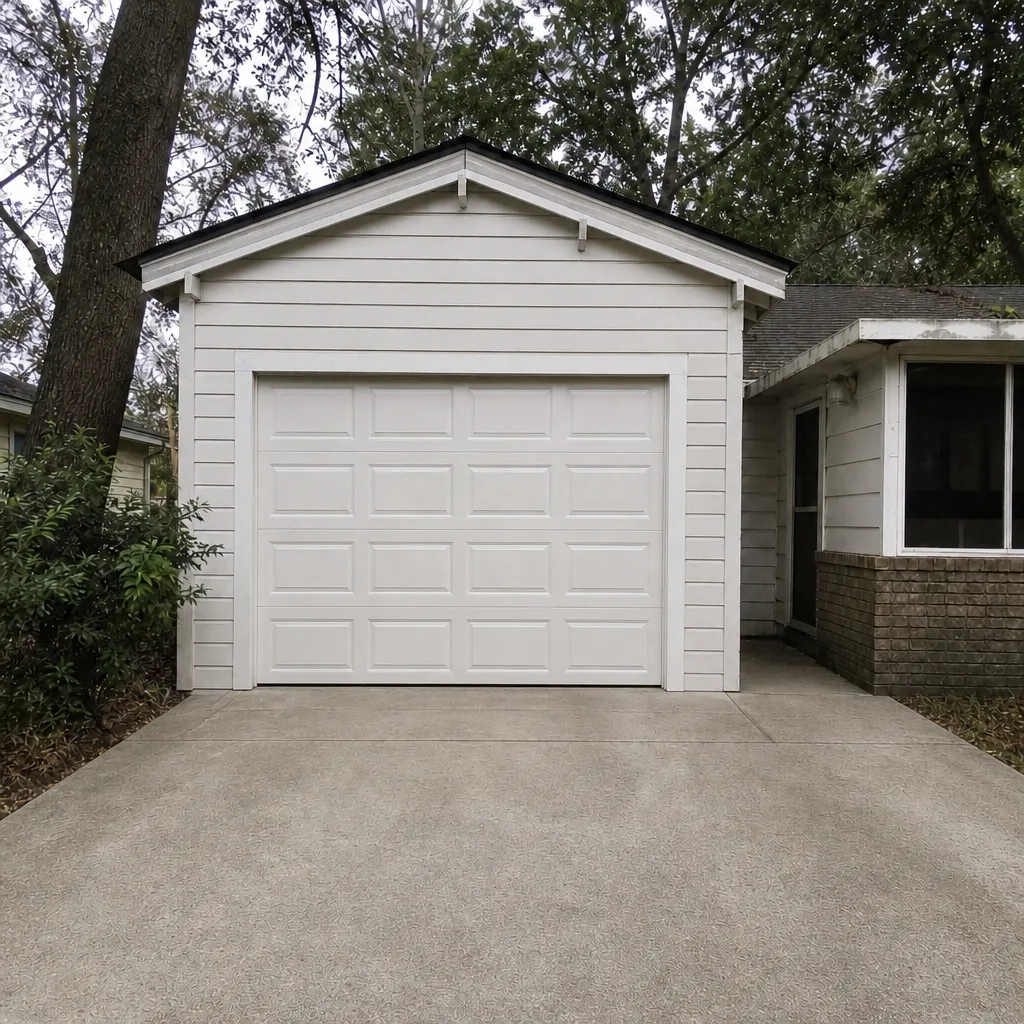
See the difference
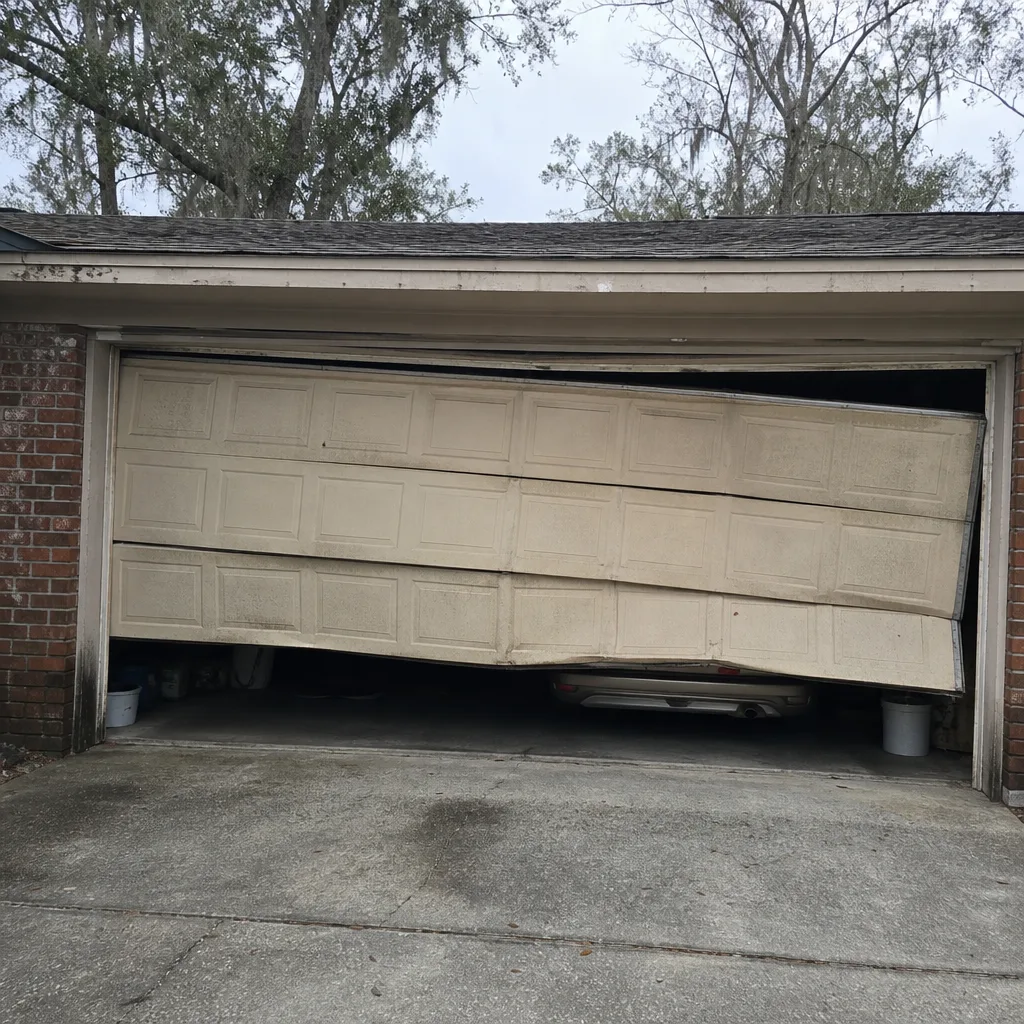 Before
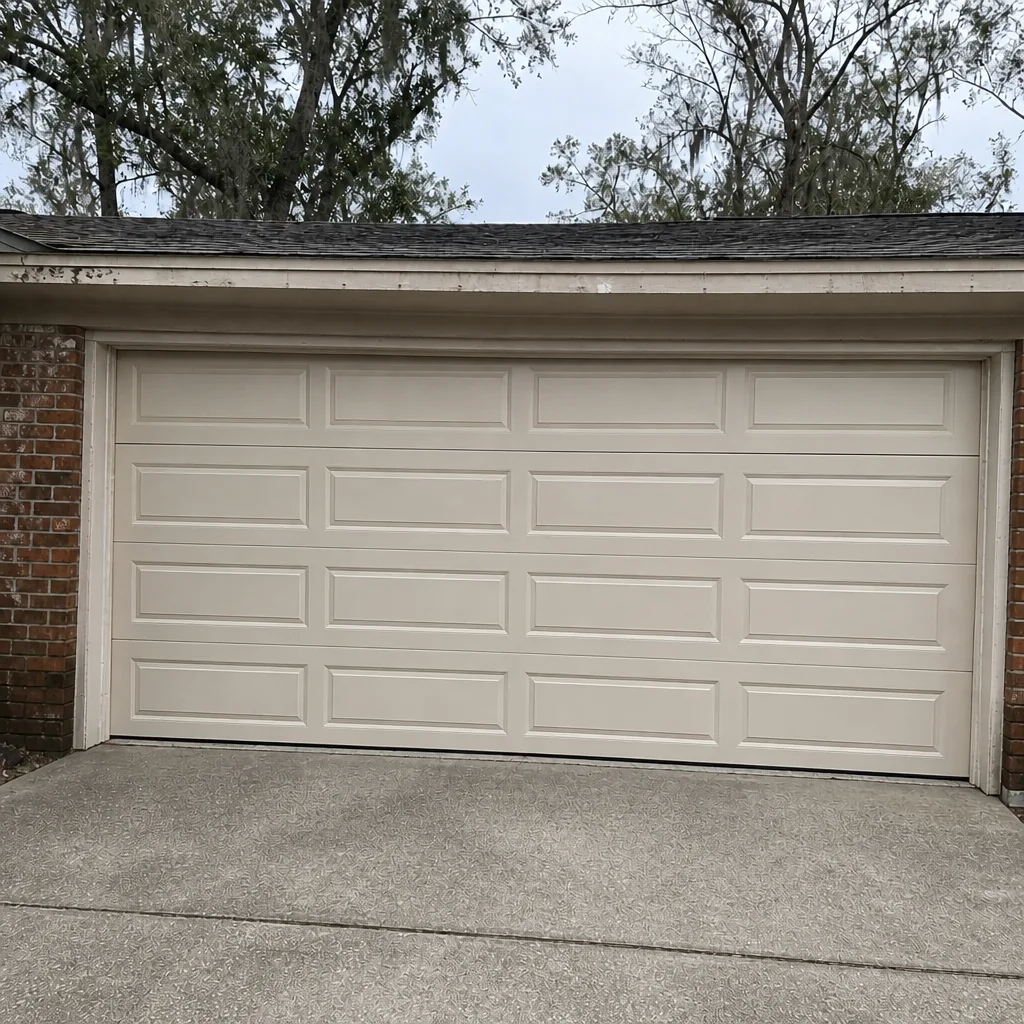 After
 Before
 After
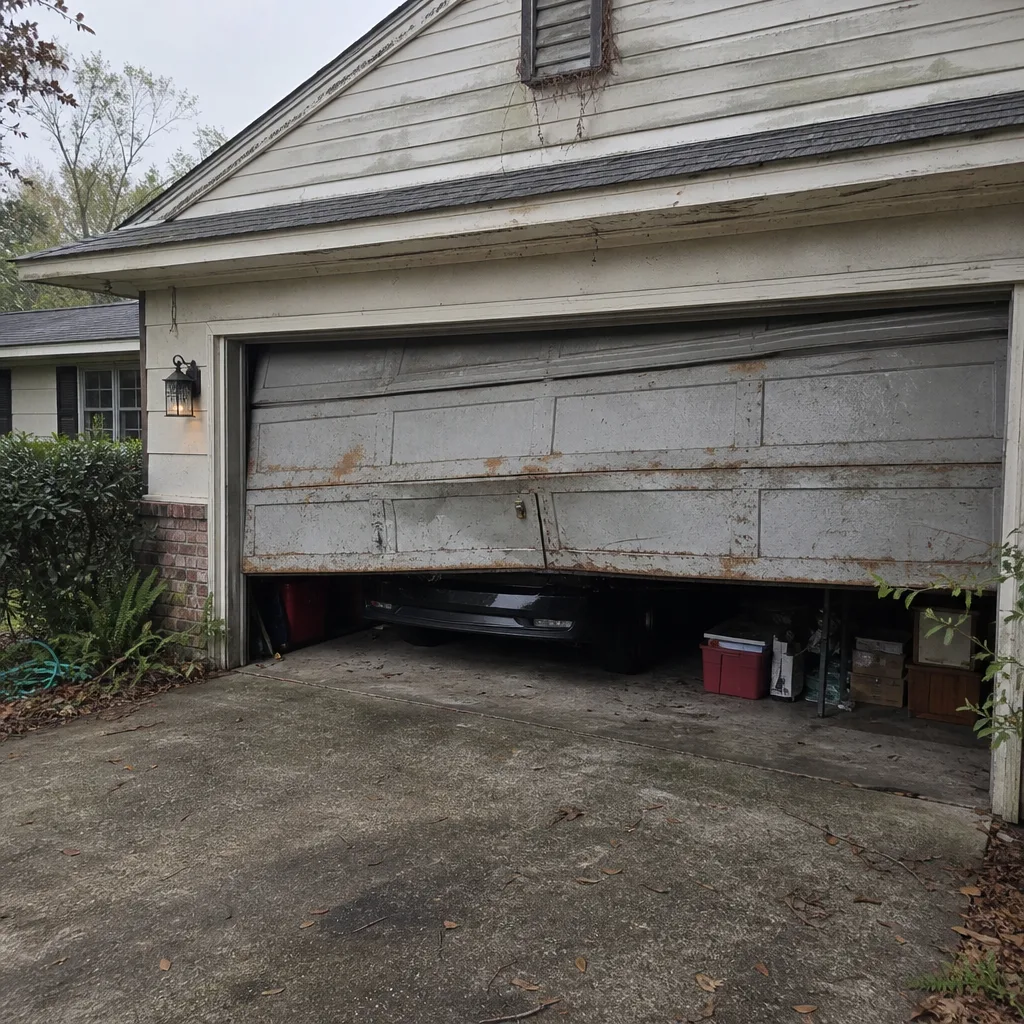 Before
 After
When to Call a Professional
Call a professional immediately if a torsion spring breaks, a cable is frayed or slack, the door won’t balance at halfway, the safety reverse or photo-eye test fails, or the door is binding in a bent track. These are the situations where continuing to use the door can make the damage worse or create a real safety hazard. Also call if rust has progressed beyond surface discoloration on hinges, rollers, or spring coils, or if the opener is reversing randomly or won’t hold its travel settings. Our technicians have up to 14 years of experience with garage doors and the brands that drive them, and Garage Door Repair Tallahassee Pros offers free estimates in Tallahassee. Call (855) 789-6528 to schedule your annual inspection or a repair.
Frequently Asked Questions
A full maintenance inspection twice a year works well in Tallahassee, with one inspection in late winter or early spring and one at the end of summer. In between, do the monthly safety tests and a visual check of seals, hinges, and springs. The two full inspections catch the seasonal problems the monthly checks can’t.
Hinges, cable drums, and the bottom seal fail fastest in Tallahassee humidity. Hinges rust at their pin joints, cable drums rust where the cable contacts them, and bottom seals harden and pull away from the floor. Springs also lose tension under sustained summer heat and should be checked as part of the balance test.
You can lubricate hinges, rollers, and tracks yourself with a silicone spray or light lithium grease, and it’s a routine part of home maintenance. Do not lubricate or adjust torsion springs, cables, or opener force and travel settings yourself. Those are high-tension and safety-critical parts. If you’re not sure which parts are safe to touch, call us and we’ll walk through it.
Pricing depends on the job and the parts involved, so we don’t quote a service call over the phone. We do provide a free estimate, and the price is set in writing before any work begins. Estimates are free. Call (855) 789-6528 for an exact quote.
Usual causes are a worn bottom seal dragging on the floor, loose hardware that’s out of alignment, or an opener force or travel setting that needs adjustment. Those are generally repair items, not safety failures. If the door still fails the safety reverse test, stop using it and call a professional before something worse happens.
A new door still needs a first-year check. Springs settle, hardware loosens, and seals seat in over the first months of use. Schedule an inspection at the one-year mark, then move to the standard twice-a-year routine for Tallahassee weather. If you’re planning a new door, see our page on Tallahassee garage door repair for what to expect as the door ages, or installation if you’re replacing it.
The Bottom Line
A garage door maintenance checklist for Tallahassee works only if it’s timed to the local climate. Two full inspections a year – one before storm season, one at summer’s end – catch the parts this humidity wears down first: hinges, cable drums, bottom seals, and torsion springs. Use the pass/fail criteria above to sort findings into monitor and call. Do the monthly safety reverse and photo-eye tests without exception. Leave springs, cables, and opener force settings to a professional, because those are the parts where a small mistake becomes an injury. Everything else is a habit of checking, and a habit protects your door for years. Our team is here if you’d rather we handle it. Navigate from the home page using Garage Door Repair Tallahassee Pros if you’d like to learn more about what we cover.
Call (855) 789-6528 for a free estimate. We answer 24/7. Fast dispatch from 7am to 7pm, Sunday through Friday, with same-day service available when your door won’t wait.
Written by the team at Garage Door Repair Tallahassee Pros.