
Last updated November 21, 2026
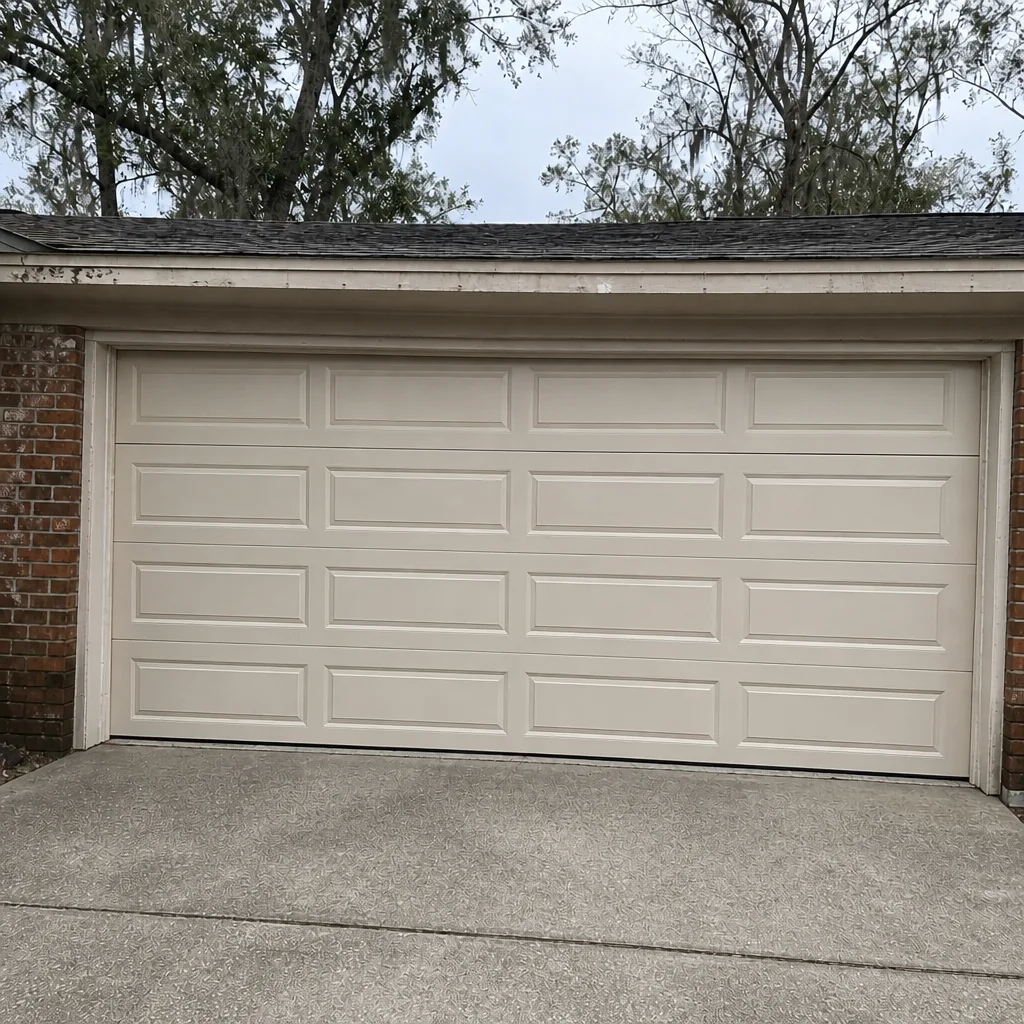
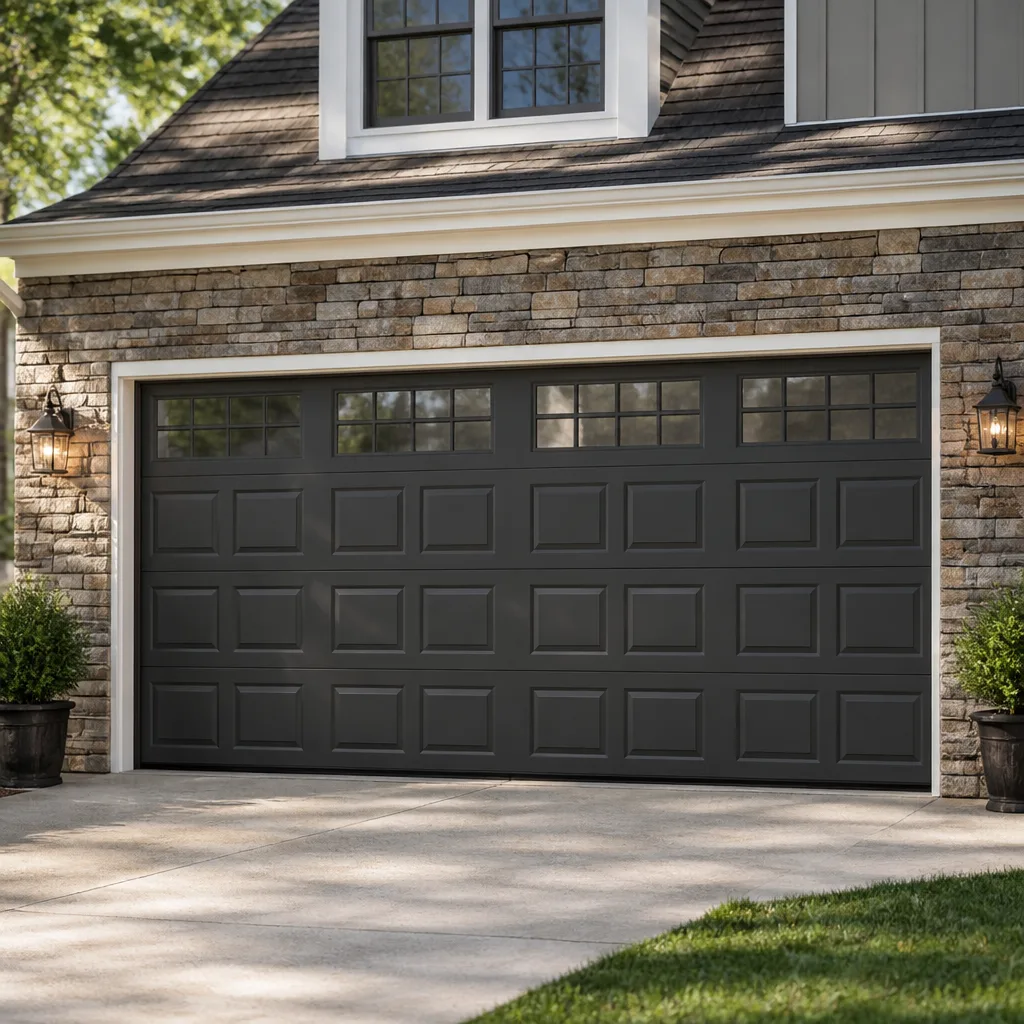 Raised-panel steel
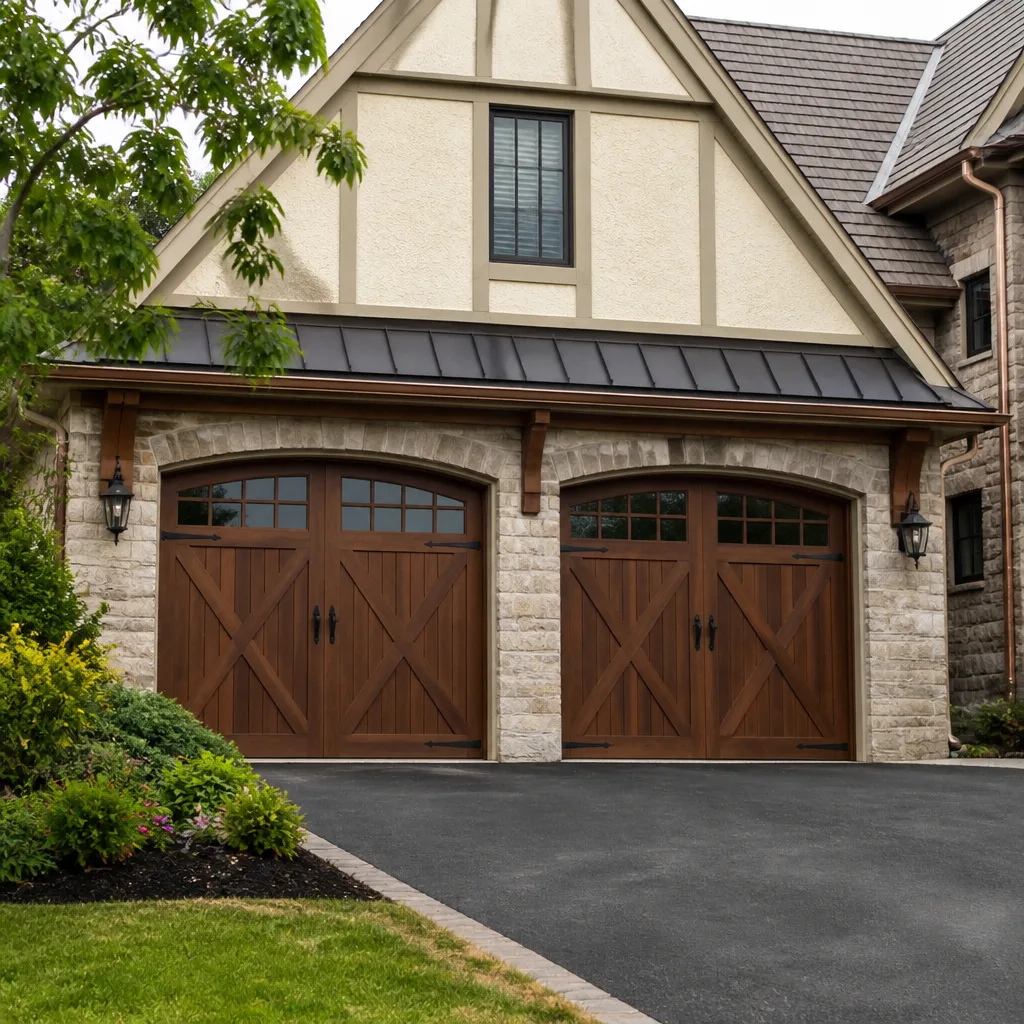 Carriage house
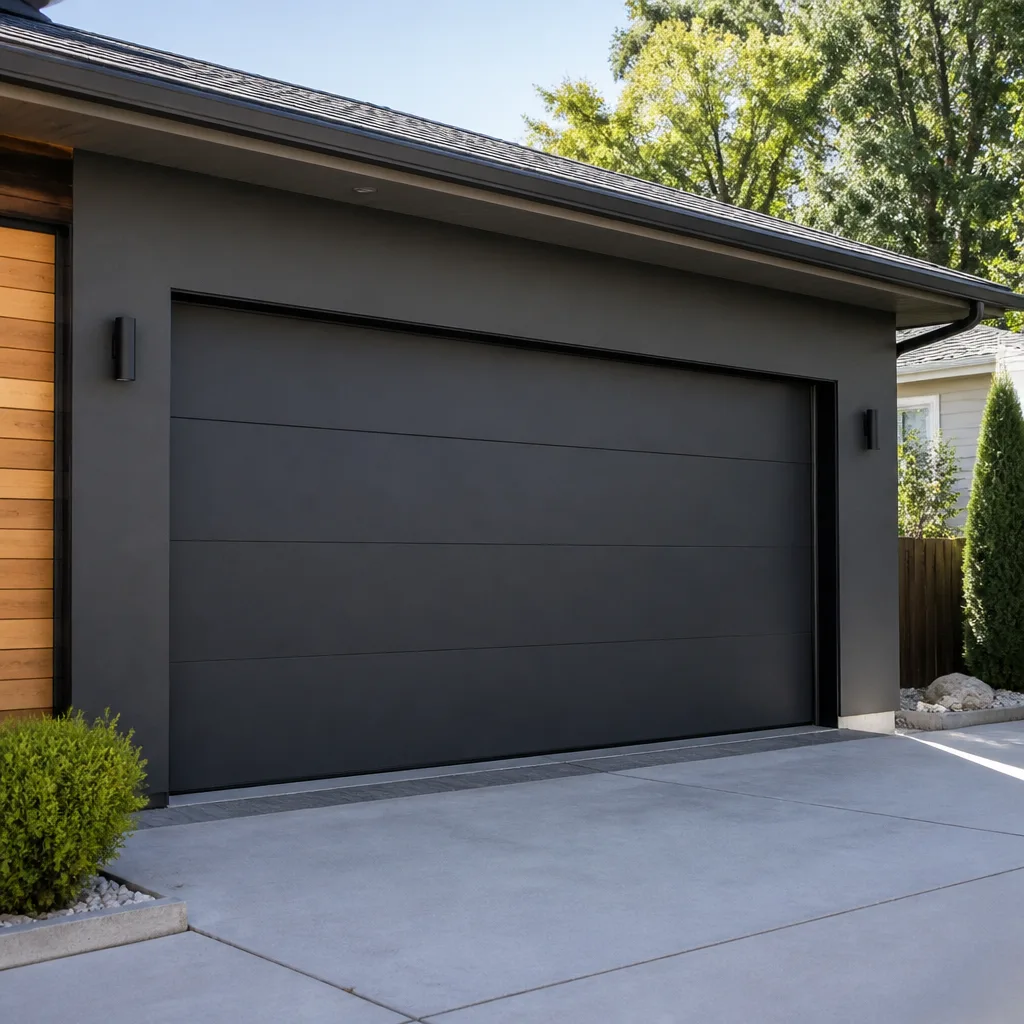 Modern flush
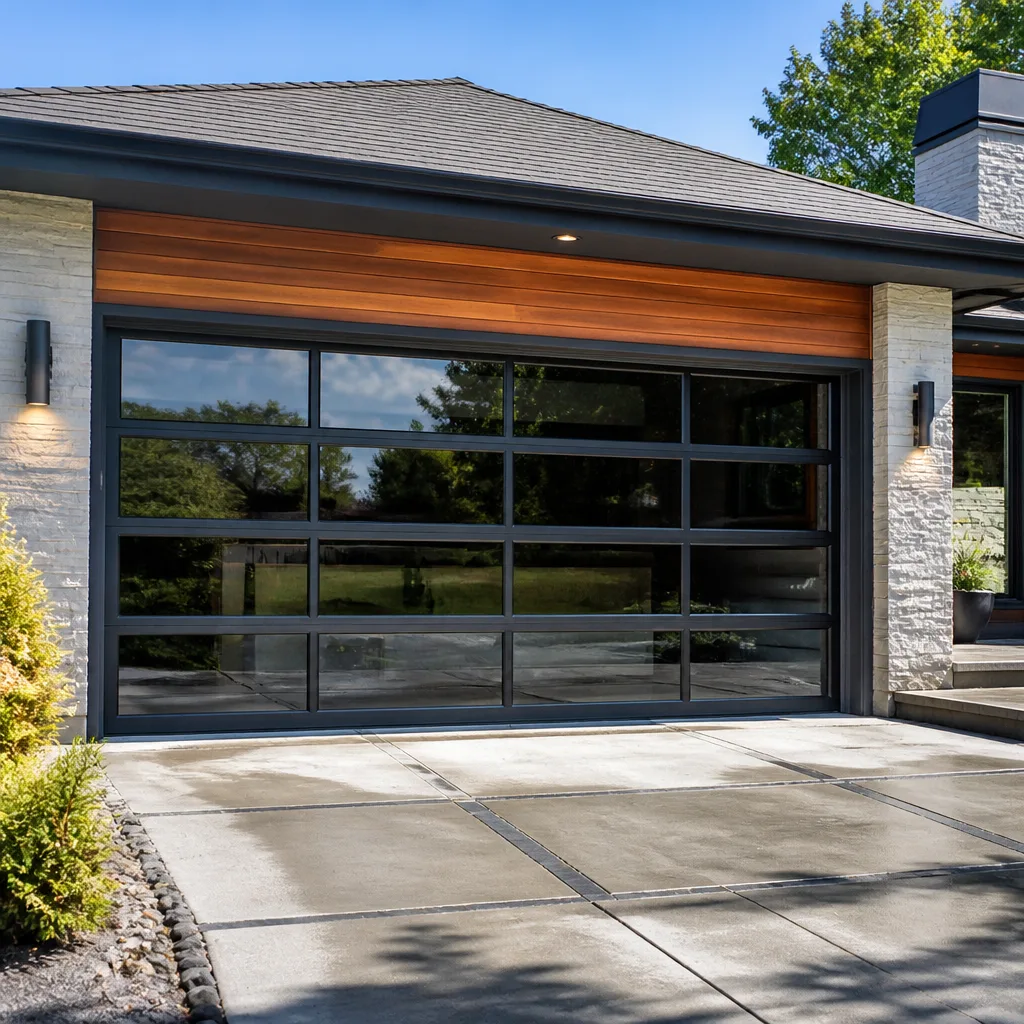 Full-view glass
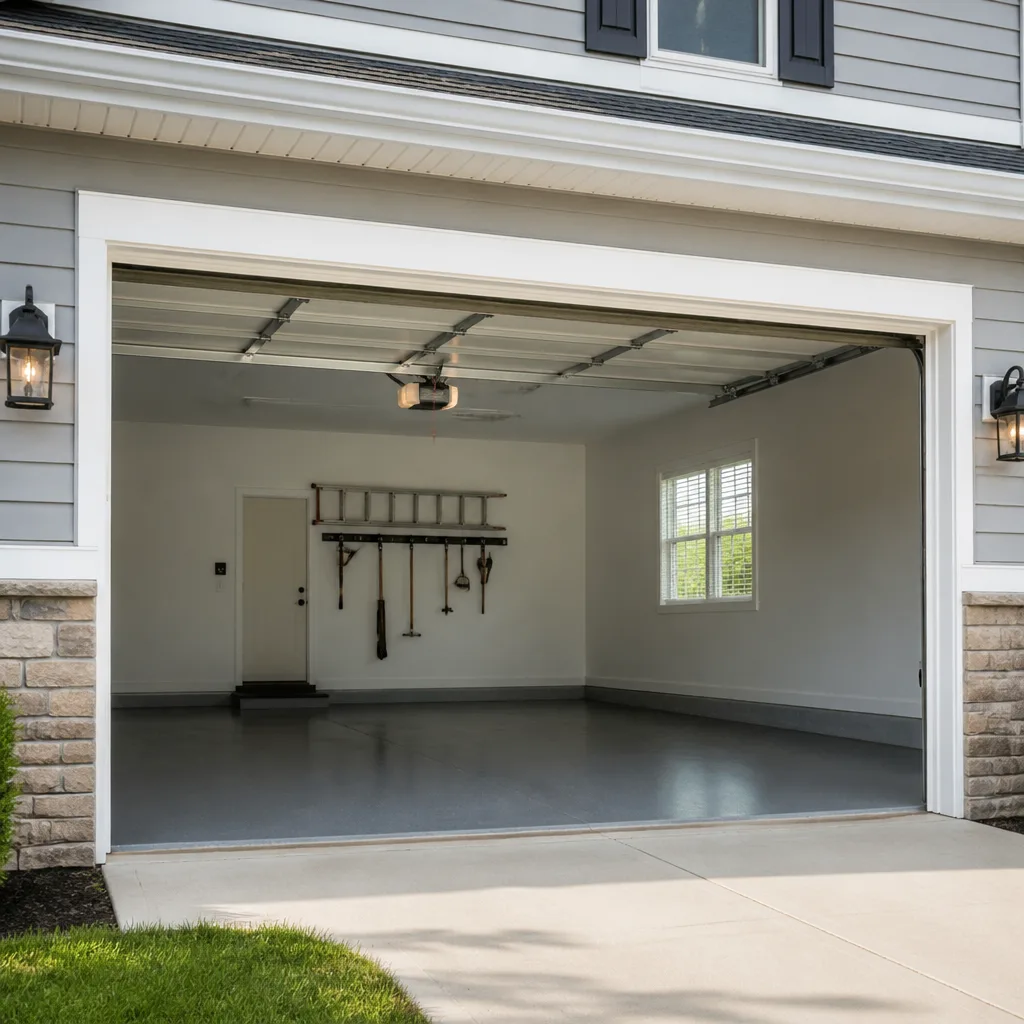 LiftMaster openers
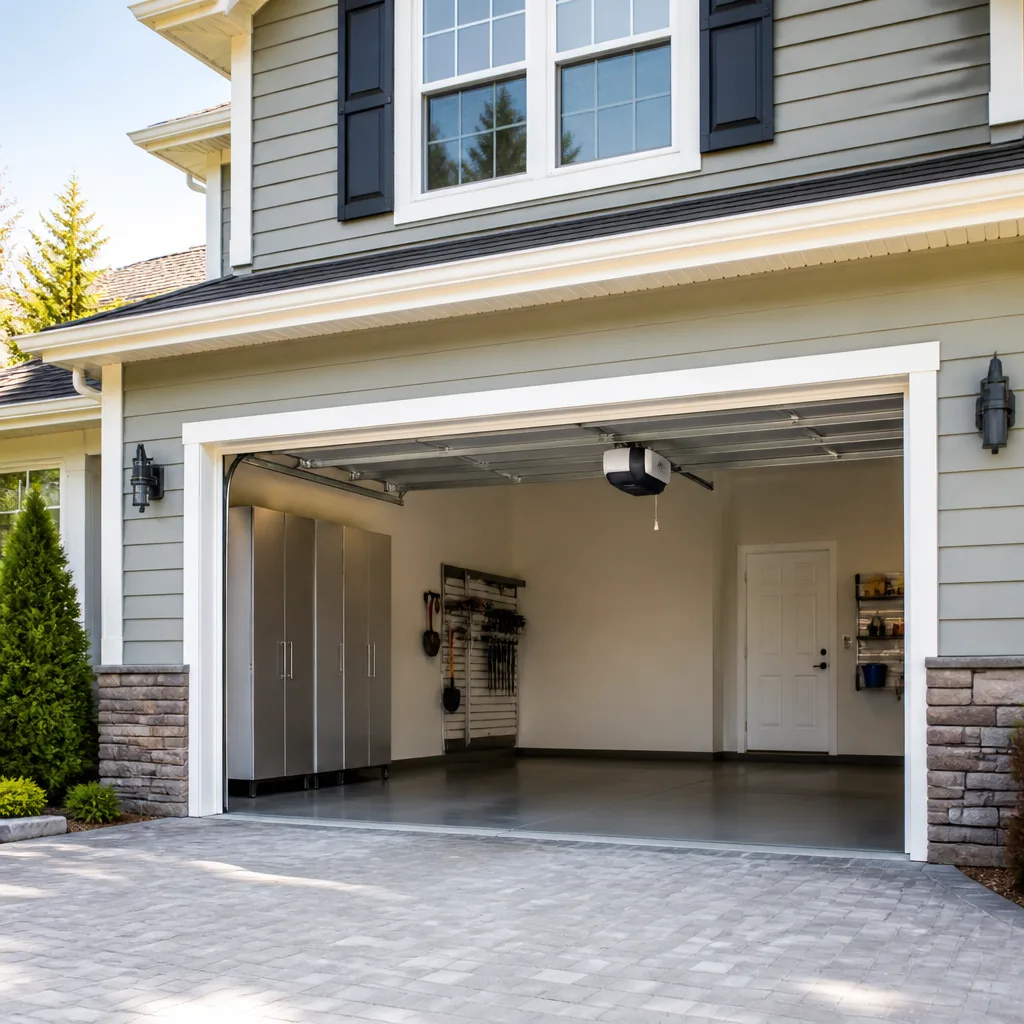 Chamberlain openers
Full 25-point door and opener safety check with every visit - springs, cables, rollers, tracks, and your LiftMaster or Chamberlain opener included
You get a price before we start. It does not change when the pro arrives.
Get your free estimateGarage Door Warning Signs: A Tallahassee Homeowner’s Reference Guide
A garage door that hesitates for two seconds before it moves isn’t “getting old.” It’s a diagnostic signal, and in most cases it points to one of three mechanical causes, each with its own urgency and repair cost. The trouble is that most homeowners in Tallahassee never learned what a failing door looks like in its early stages, so a $200 repair quietly turns into a full spring or cable failure. This guide pairs each symptom you can see or hear with the specific component behind it. By the end, you’ll be able to describe exactly what your door is doing, understand what’s actually at risk, and know which warning signs mean stop using the door today.
Quick Answer
The most important garage door warning signs are a door that moves in jerks or hesitates before opening, grinding or scraping noises, a door that sits crooked or leaves an uneven gap at the floor, frayed cables, and visible rust streaks along the tracks or springs. Any of these can point to worn springs, a failing cable, loose hardware or a strained opener. Signs that involve springs, cables or a door that won’t stay up on its own are safety issues and mean you should stop operating the door until a technician looks at it. Signs like a noisy roller or a cosmetic dent can usually wait for a scheduled visit.
Styles & brands we work with
- Raised-panel steel
- Carriage house
- Modern flush
- Full-view glass
- LiftMaster openers
- Chamberlain openers
Table of Contents
- Symptom-to-Cause: What Your Door Is Telling You
- Which Warning Signs Are Safety Risks and Which Can Wait
- How Tallahassee Humidity Speeds Up Certain Warning Signs
- Opener Warning Signs and What Brand Fault Codes Mean
- The Two Warning Signs Homeowners Ignore Most
- Springs and Cables: The Parts You Should Never Touch
- The Five-Minute Walk-Around Check
- When a Warning Sign Means Repair and When It Means Replace
Symptom-to-Cause: What Your Door Is Telling You
Almost every garage door failure announces itself before it happens. The skill is in connecting the behavior you notice to the part that’s actually failing. Here’s how the symptoms map to causes, and what each one usually means for the repair.
- Grinding or scraping as the door moves – Usually worn rollers, dry or bent hinges, or a torsion spring that has lost tension and is no longer lifting its share of the door’s weight. The opener ends up doing work the spring should be doing.
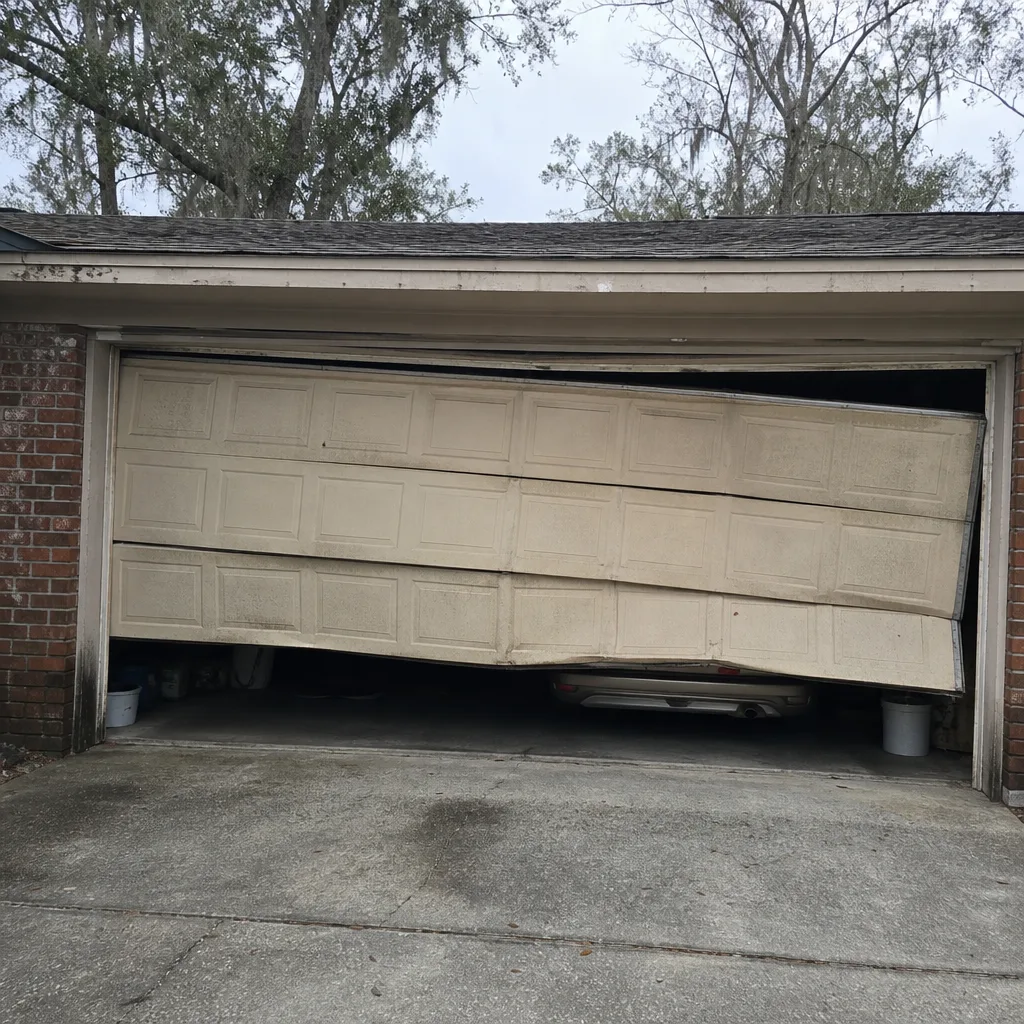
- Door sags on one side or sits crooked – One of the two torsion springs has failed while the other is still holding, or a cable has slipped off its drum. A crooked door strains the tracks and the opener every time it runs.
- Slow response or a two-second hesitation before moving – Most often a failing opener capacitor, a logic board on its way out, or a door that’s become too heavy for the opener because the springs have weakened. The motor is stalling before it finds the torque to lift.
- Door reverses before it reaches the floor, or won’t close fully – A misaligned safety sensor, a track obstruction, or a limit setting that’s drifted. This one looks like an opener problem but is frequently a door problem.
- Uneven gap at the floor on one side – A bent bottom panel, a twisted track, or a cable that’s stretched. In Tallahassee, where summer storms drive rain sideways, that gap also lets water and insects under the door.
- Loud bang from the garage, door won’t lift – A torsion spring has broken. This is the classic snap you hear from inside the house, and it means the door should not be used again until it’s repaired.
What we look for on a diagnostic visit is whether the symptom is isolated or part of a chain. A grinding noise might be rollers alone, or it might be the first sign that the opener has been compensating for weak springs for months. That’s the difference between a roller replacement and a spring repair, and it’s why we test the door by hand before we touch the opener.
Which Warning Signs Are Safety Risks and Which Can Wait
You don’t need tools to sort a warning sign into “call today” or “schedule a visit.” You need your hands, your eyes and one simple test: disconnect the opener and try to lift the door manually.
- Pull the release cord to disconnect the opener from the door. This is the red handle hanging from the rail.
- Lift the door halfway and let go. A healthy door stays put. A door that drops or needs constant force to hold up has a spring or balance problem.
- Look and listen while you move it slowly. Grinding, popping or a cable that looks like a frayed rope are all stop signs.
- Reconnect the opener and test the safety reverse by placing an object in the door’s path. The door should reverse on contact.
Any sign that involves a spring, a cable, a door that won’t stay up, or a door that fails to reverse on contact is a safety issue. Stop using the door and get it looked at before it runs again. Cosmetic signs – a scuffed panel, a slightly noisy roller, a remote that needs a fresh battery – can wait for a scheduled appointment without risk.
The middle ground is where most Tallahassee homeowners live: a door that still works but sounds worse than it used to. That’s not an emergency, but it’s also not nothing. A door that’s straining today is a door that’s wearing out the opener motor and the cables faster than it should, and those are the repairs that get expensive. When you’re ready to have it looked at, garage door repair covers everything from a single noisy roller to a full spring and cable replacement.
How Tallahassee Humidity Speeds Up Certain Warning Signs
Tallahassee’s climate does a specific kind of damage to garage door hardware, and it shows up as warning signs earlier than it would in a drier part of the country. The humidity here sits high through most of the year, and a garage is an enclosed, unventilated box that holds that moisture against metal. Two signs are worth watching for because of it.
Rust streaks along the tracks, springs and hinges. A thin orange-brown line running down a track or across a spring coil is moisture doing its work. Surface rust on a track is usually harmless and improves with cleaning and light lubrication. Rust concentrated on a torsion spring or at a cable end is different: it’s a sign of metal fatigue starting, and a rusted cable is closer to snapping than a clean one. In Tallahassee, a cable that’s been quietly rusting for two summers can fray from the inside out before you ever see a broken strand.
Cable fraying that appears faster than you’d expect. Because the humidity accelerates corrosion on the steel strands, cables here tend to fail at the drum end first. Look for a fuzzy, frayed look where the cable wraps the drum, or a cable that’s jumped its groove. Any cable with visible broken strands is a stop-using-the-door sign, no exceptions.
One related point: the same damp air that rusts your hardware also finds its way into opener housings and remotes. If your remote has gone unreliable and a fresh battery doesn’t fix it, moisture in the contacts is a common culprit. That’s a job for garage door opener repair rather than a replacement remote, because the problem is usually in the receiver, not the clicker.
Opener Warning Signs and What Brand Fault Codes Mean
The opener is the part of the system that talks to you most clearly, if you know how to listen. Modern openers log their problems and blink them out in a pattern. The brands we service most often in Tallahassee homes – LiftMaster, Chamberlain, Genie and Craftsman – all use a blinking LED on the motor head to report faults, and the pattern points to a category of problem rather than a single part.
- Repeated blinking on one code – Usually a safety sensor or wiring fault. The door sees an obstruction that isn’t there, or a sensor wire has a break.
- Opener runs but the door doesn’t move – The release cord may be pulled, the gear or sprocket may be stripped, or the door is disconnected from the carriage. On older units a worn drive gear is common.
- Door moves a few inches and stops – Often a force or travel-limit setting that’s drifted, or the door has become too heavy for the opener because the springs are weak.
- Opener works from the wall button but not the remote – Usually a receiver or remote pairing problem, sometimes moisture in the contacts.
- App or Wi-Fi connection drops – On LiftMaster MyQ, Chamberlain and Genie Aladdin Connect systems, a dropped connection is frequently a router or network issue rather than the opener itself.
Fault codes tell you the category, not the cure. Two different doors can blink the same code for two different reasons, which is why a diagnostic visit starts with the door and the sensors before it ever opens the motor housing. If your opener is reporting a fault, we service the system you already own rather than steering you toward a new unit. When the opener is genuinely at the end of its life, garage door installation covers a replacement that matches your door’s weight and your home’s wiring.
The Two Warning Signs Homeowners Ignore Most
In our experience, two warning signs get dismissed more than any others, and both of them lead to the same place: a full spring or cable failure.
The first is a door that hesitates before it moves. People write it off as the door “warming up” or the opener “getting old.” What’s actually happening is that the springs have lost tension, and the opener has to overcome the full weight of the door before it can start lifting. That extra load wears the opener’s gears and the door’s cables a little more with every cycle. When the spring finally goes, it goes with a bang loud enough to be heard through the house, and the door is dead in the down position until it’s repaired.
The second is a door that’s started to feel heavier when you lift it by hand, or that won’t stay up on its own. A balanced door stays put at any height. A door that sinks back down is telling you the springs are no longer carrying their share. That’s a warning, not a preference, because a door that’s out of balance is loading one cable harder than the other. When that cable snaps, the door can drop on one side, twist in the tracks, and bend panels. What would have been a spring replacement becomes a spring, cable and panel repair.
The pattern is the same in both cases: the ignored sign is cheap to fix, and the failure it leads to is not. Neither one requires you to diagnose anything yourself. You just need to notice it and describe it. That’s the whole point of this guide.
Springs and Cables: The Parts You Should Never Touch
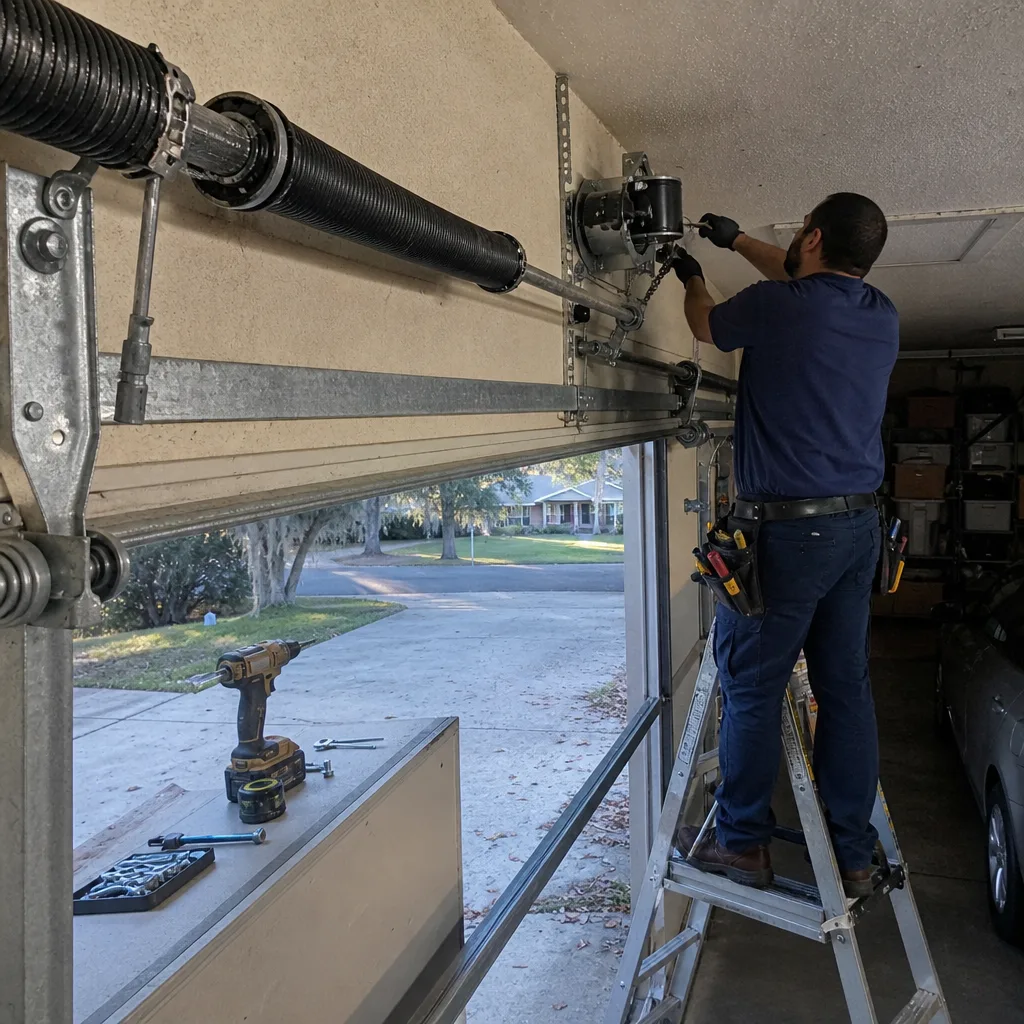
Torsion springs and the cables that run through them are under extreme tension at all times, even when the door is closed and looks relaxed. They are the most dangerous part of a garage door system, and they’re the reason spring repair is its own specialty. We handle them so you don’t have to, and that’s not a sales line – it’s the honest answer to what these parts can do if they’re released wrong.
Here’s what you should know rather than what you should try. A torsion spring stores enough energy to lift a door weighing hundreds of pounds, and adjusting or releasing one requires the right winding bars, the right technique, and a clear understanding of which way the tension runs. Doing it wrong doesn’t fail gently. The spring or the winding bar can release suddenly and with force. This is the single most common serious injury in garage door work, and it’s why a professional won’t talk a homeowner through a spring replacement over the phone.
The warning signs to watch for on springs and cables are visible without tools:
- A visible gap in a torsion spring coil, usually with the two halves slightly offset
- A door that won’t lift at all, or lifts a few inches and stops
- A cable that’s jumped its drum and is hanging loose
- A cable with broken or frayed strands
- A loud bang followed by a door that won’t move
If you see any of these, stop operating the door and call a technician. The same goes for a door that’s out of balance. Our technicians have up to 14 years of experience with spring and cable systems, and we service the brand you already have – Clopay, Amarr, Wayne Dalton, Craftsman, LiftMaster, Chamberlain, Genie, Raynor and more. You can read more about what our team does at Garage Door Repair Tallahassee Pros.
The Five-Minute Walk-Around Check
You can catch most developing problems with a short inspection once a season. Here’s the order we’d suggest, and it takes about five minutes.
- From inside the garage, with the door closed: look up at the springs and the cables. Check for rust streaks, a gap in a spring coil, or a cable that’s jumped its drum.
- Look at the tracks: check for bends, dents or debris. A track that’s out of alignment will wear out rollers fast.
- Test the balance: pull the release cord, lift the door halfway and let go. It should stay. Reconnect when done.
- Test the safety reverse: place an object in the door’s path and close it. The door should reverse on contact.
- Listen: run the door once and pay attention. Grinding, scraping or a rhythmic pop is worth a call.
- Check the opener light: if the LED on the motor head is blinking a pattern, note the code and mention it when you call.
That’s the whole check. None of it requires you to adjust anything, loosen anything or get near a spring. If something looks wrong, you stop and call. In a Tallahassee summer, when the garage is hot and the humidity is high, this five-minute pass is the difference between catching a rusted cable early and finding out the hard way.
When a Warning Sign Means Repair and When It Means Replace
Not every warning sign is a repair, and not every repair is the right call. The question we ask is whether the part that’s failing is the cause or the symptom.
A single noisy roller, a worn hinge, a misaligned sensor or a remote that’s stopped pairing are all repair jobs, and they’re usually straightforward. A failing spring on an otherwise healthy door is a repair too, even though it feels dramatic. What tips toward replacement is when the warning signs stack up: a door with multiple bent panels, tracks that have been hit and re-bent more than once, an opener that’s failing alongside a door that’s out of balance, or a door whose panels are no longer made in the size you need.
If your door is 20 years old or more and the panels are starting to delaminate or rust through, a repair might fix the immediate symptom while leaving you with the same door and the same problem next year. That’s when a conversation about replacement makes sense. It’s a scheduled job, not an emergency one: we measure the opening, recommend a door that fits the space and the style of the house, and give you a written price before anything is ordered. LiftMaster and Chamberlain openers pair cleanly with most new doors, so a replacement doesn’t mean starting over with your smart-home setup.
Common Mistakes to Avoid
- Spraying lubricant on a torsion spring to quiet a noise. Springs don’t need lubrication, and the noise is usually coming from the rollers or hinges, not the spring. You’ll mask the real problem and attract dust to the coil.
- Forcing a door that’s stopped midway. If the door reverses or stalls, holding the button or pushing it through puts the full load on the opener and can bend a panel. Let it stop and call.
- Ignoring a door that won’t stay up by hand. This is the most common pre-failure sign. A door that sinks is telling you the springs are done, and it should be treated as a warning, not a habit.
- Adjusting the force setting on the opener to make a heavy door lift. Raising the force setting pushes a tired motor harder. It hides the spring problem and shortens the opener’s life.
- Putting off a rusted cable in the rainy season. Humidity in Tallahassee accelerates corrosion, and a cable that’s already fraying gets weaker every week. A cable replacement is a small job compared to the panel damage a snapped cable causes.
- Assuming a blinking opener light means the opener is dead. Most fault codes point to sensors, wiring or settings. A diagnostic visit often fixes the code without replacing the unit.
- Calling a general handyman for a spring or cable job. These parts are under constant high tension and need a specialist’s tools and technique. It’s the one repair on a garage door that should never be a generalist’s job.
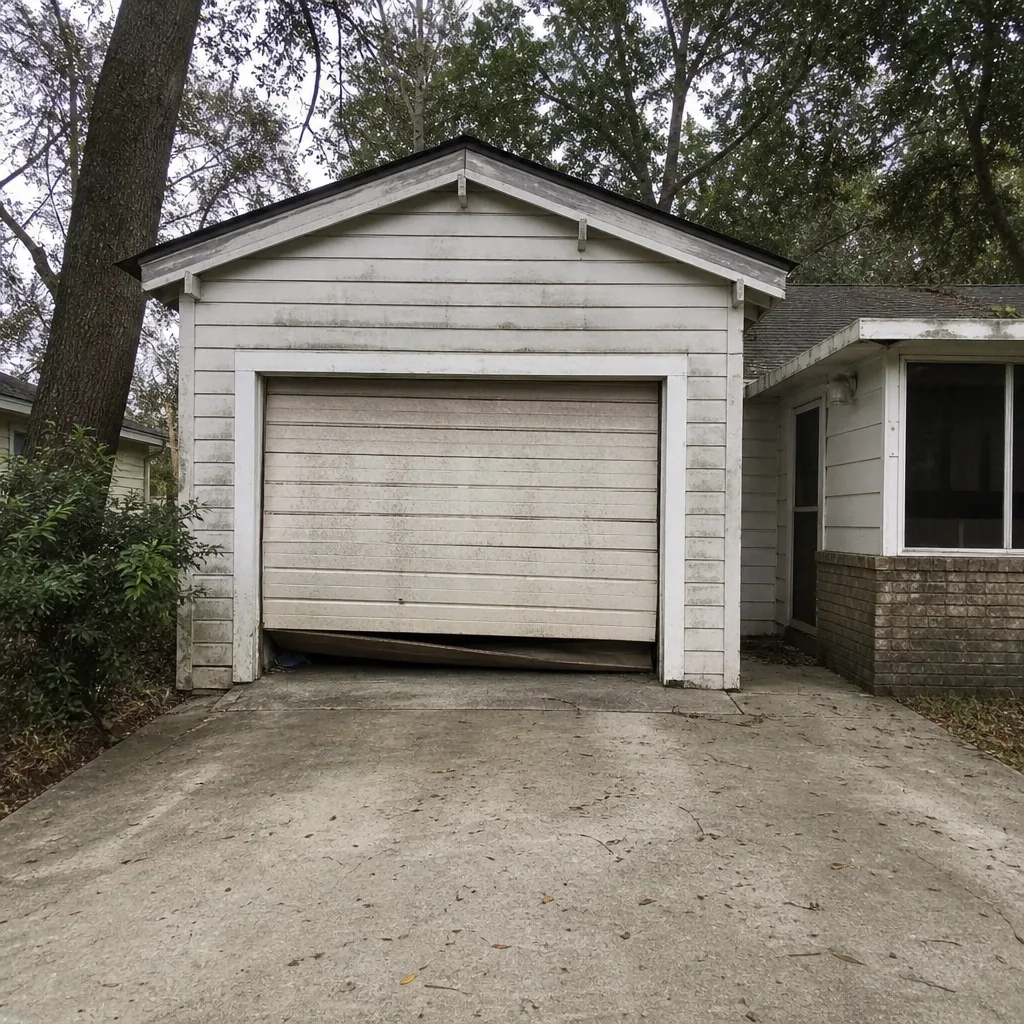
See the difference
 Before
 After
 Before
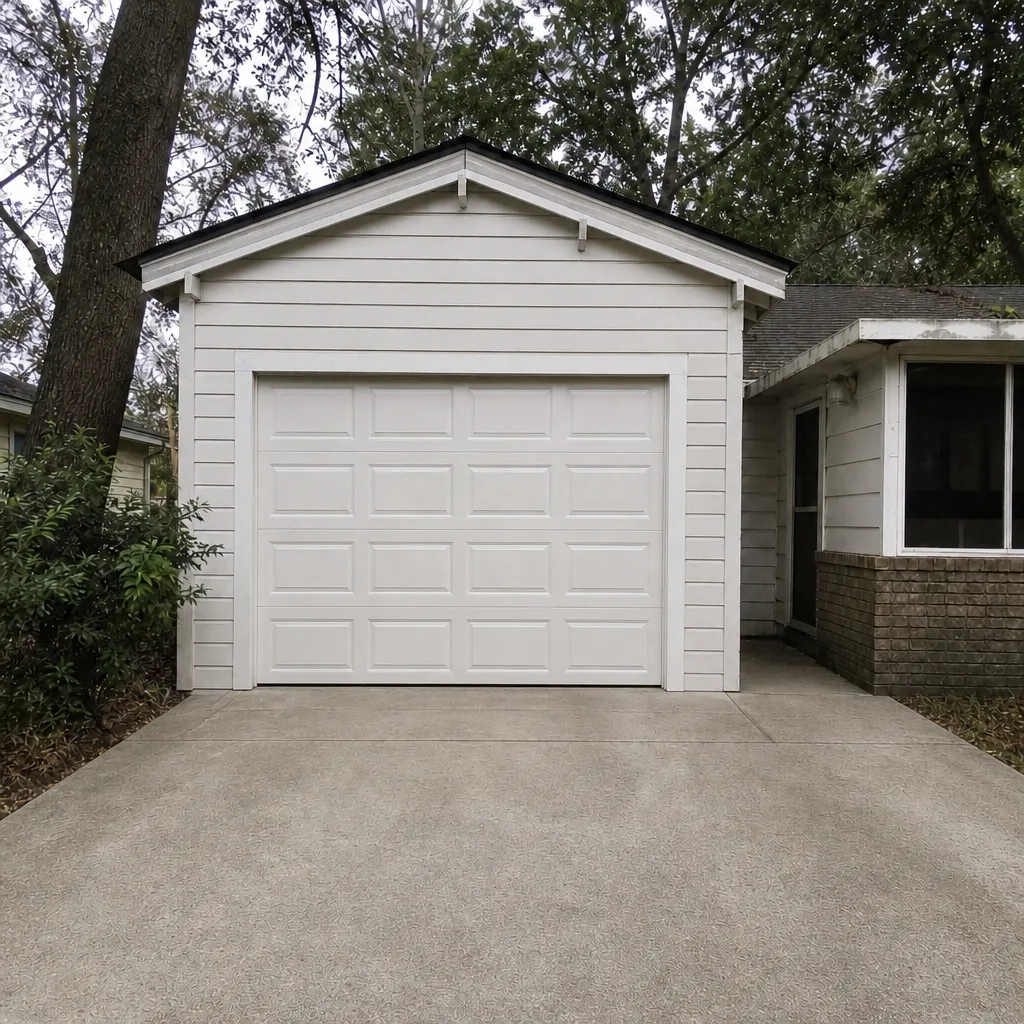 After
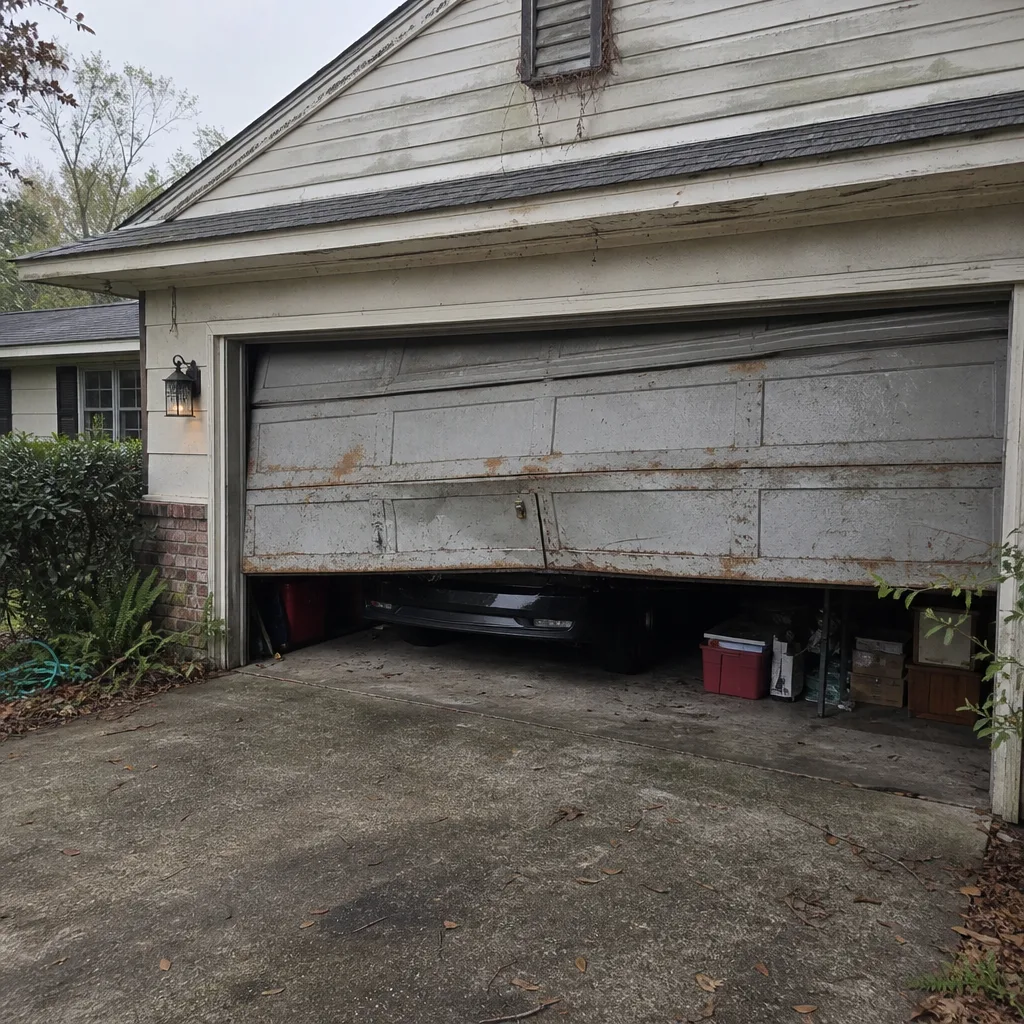 Before
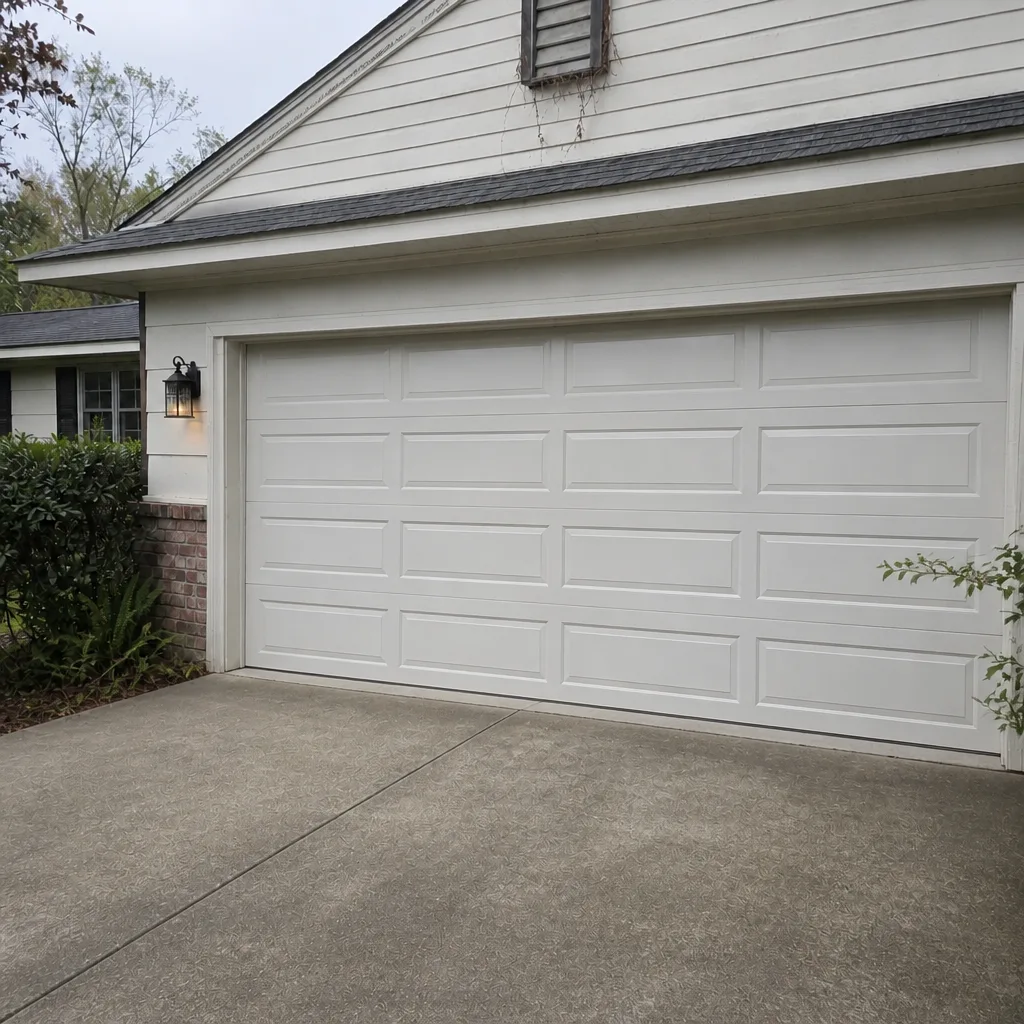 After
When to Call a Professional
Call a professional if you see a gap in a spring, a frayed or jumped cable, a door that won’t stay up by hand, or a door that reverses without an obstruction. Those are the signs that put stress on the whole system, and they get worse the longer the door runs. Call as well if your opener is blinking a fault code you can’t identify, or if the door has started hesitating, grinding or sitting crooked. Garage Door Repair Tallahassee Pros offers free estimates in Tallahassee – call (855) 789-6528. We answer 24/7, and fast dispatch runs from 7am to 7pm, Sunday through Friday. We’re closed on Saturdays, so a call that comes in then is booked into Sunday’s dispatch window. When our technician arrives, the price is quoted and agreed before any work starts, and the written estimate sets the final price.
Frequently Asked Questions
A single torsion spring replacement in Tallahassee typically costs between $180 and $340, and a matched pair is usually replaced together at roughly twice that. Spring prices depend on the door’s weight, the spring size and how much disassembly the job needs, so the written estimate you get on site is the one that counts. Call (855) 789-6528 for an exact quote – estimates are free.
No. We quote and agree the price before any work starts, and the written estimate sets the final price. If we find something during the repair that wasn’t visible in the initial look, we stop and talk to you before doing anything extra. Call (855) 789-6528 to book a free estimate.
Often yes, because same-day service is built into how we work. We answer 24/7 and dispatch from 7am to 7pm, Sunday through Friday, and a call outside that window is booked into the next opening. Call (855) 789-6528 and we’ll tell you what’s available.
A hesitation almost always means one of three things: weakened springs, a failing opener capacitor, or a door that’s become too heavy for the opener to lift smoothly. The spring is the most common cause and the one with the biggest safety implications. Call (855) 789-6528 to have it checked – estimates are free.
We connect you with independent local professionals who are licensed and insured as their state requires. Our technicians have up to 14 years of experience and service every major brand, including LiftMaster, Chamberlain, Genie, Clopay, Amarr, Wayne Dalton, Craftsman and Raynor. Call (855) 789-6528 to book a visit.
Look at the cable where it wraps the drum. Frayed strands, a fuzzy texture, or a cable that’s jumped its groove all mean the cable is close to failing, and a cable that’s rusted along its length is weaker than it looks – a real concern in Tallahassee’s humid climate. Stop using the door and call (855) 789-6528. Estimates are free.
The Bottom Line
Most garage door failures give you weeks of warning before they happen. A hesitation, a grinding noise, a rust streak or a door that won’t stay up is the system telling you which part is under stress, and it’s doing so while the repair is still small. The signs that matter most are the ones attached to springs and cables, because those are the parts that fail dangerously and take other components with them. If you take one thing from this guide, make it the balance test: pull the release cord, lift the door halfway, and see if it stays. If it doesn’t, stop using the door. In a Tallahassee climate that holds moisture against metal most of the year, that five-minute check is the cheapest maintenance you’ll ever do.
If something on your door looks or sounds wrong, call (855) 789-6528 for a free estimate. We work on the brand you already have, whether that’s a Clopay door on its original LiftMaster opener or a Wayne Dalton system that’s been blinking a fault code for a week. We answer 24/7, and fast dispatch runs from 7am to 7pm, Sunday through Friday. One call covers the opener, the panels and the springs.
Written by the team at Garage Door Repair Tallahassee Pros.