
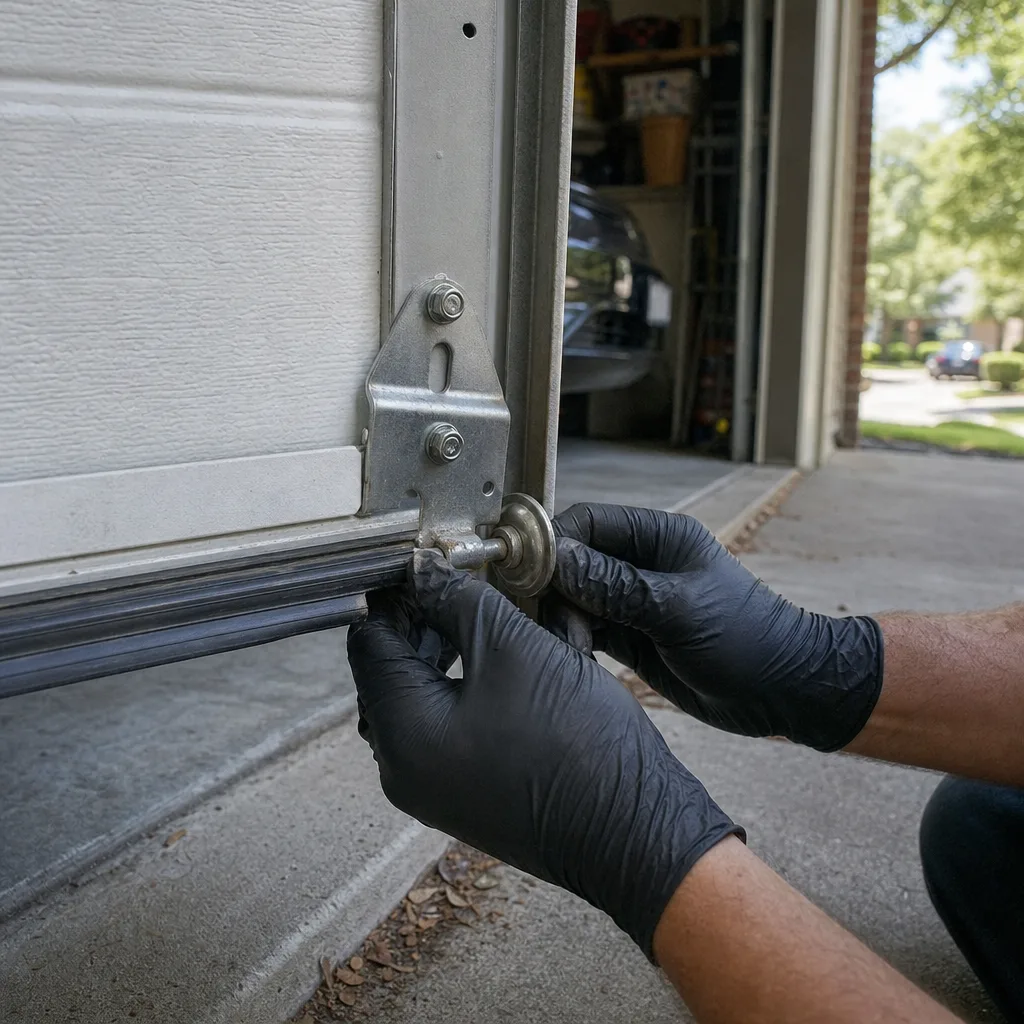
Last updated November 21, 2026
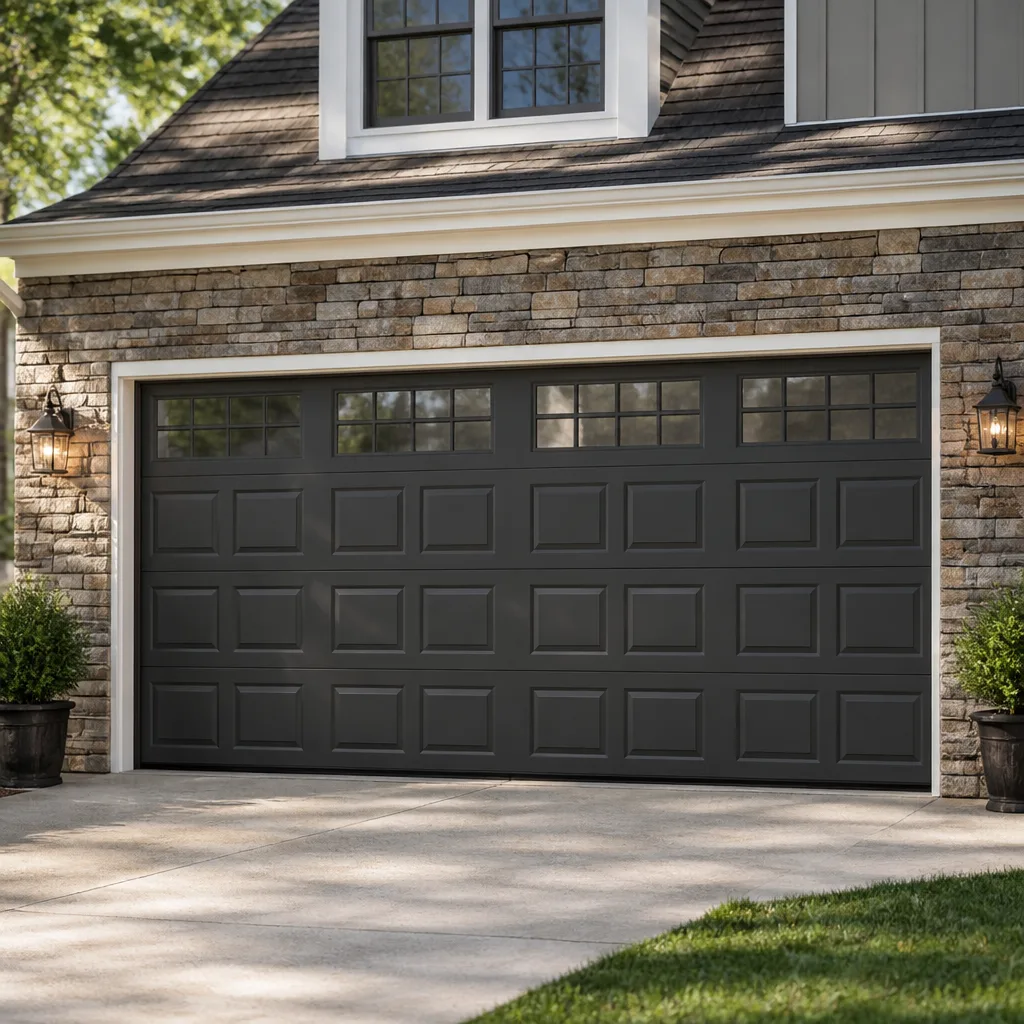 Raised-panel steel
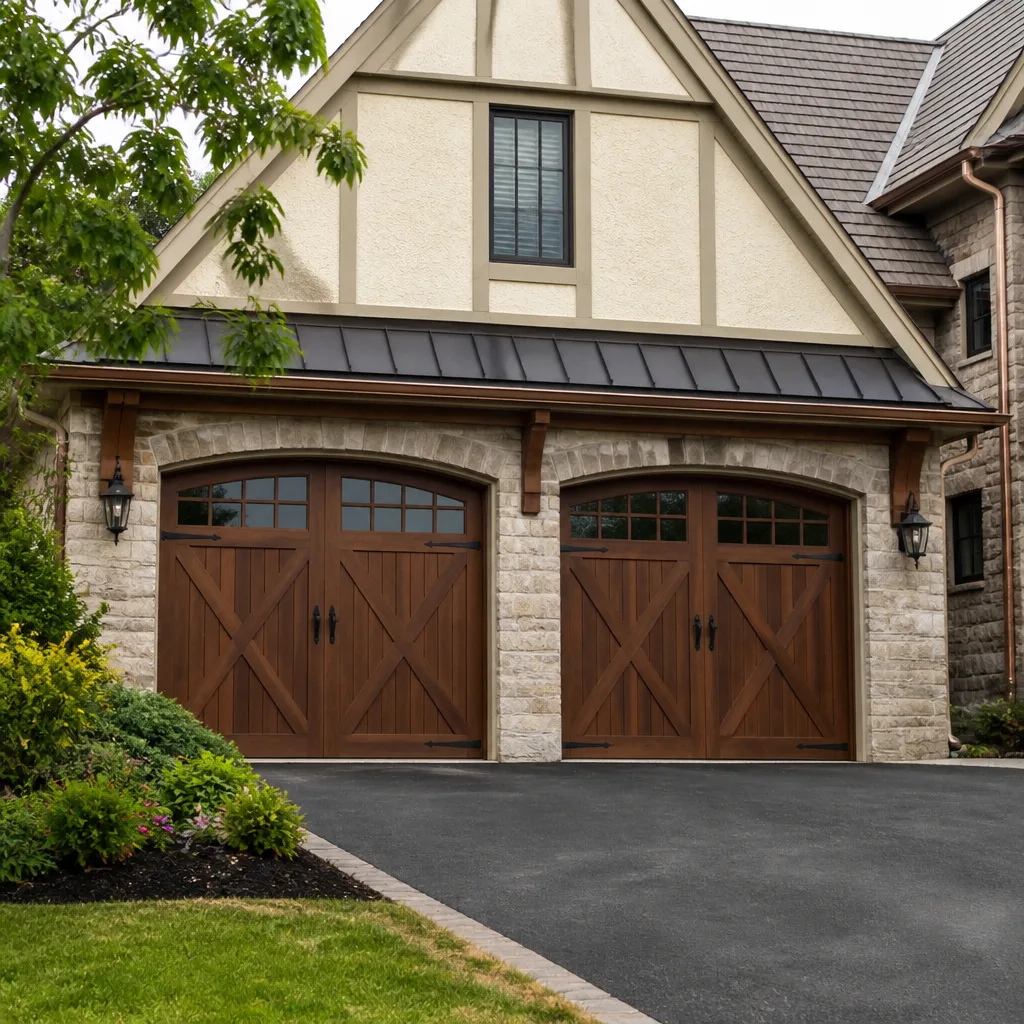 Carriage house
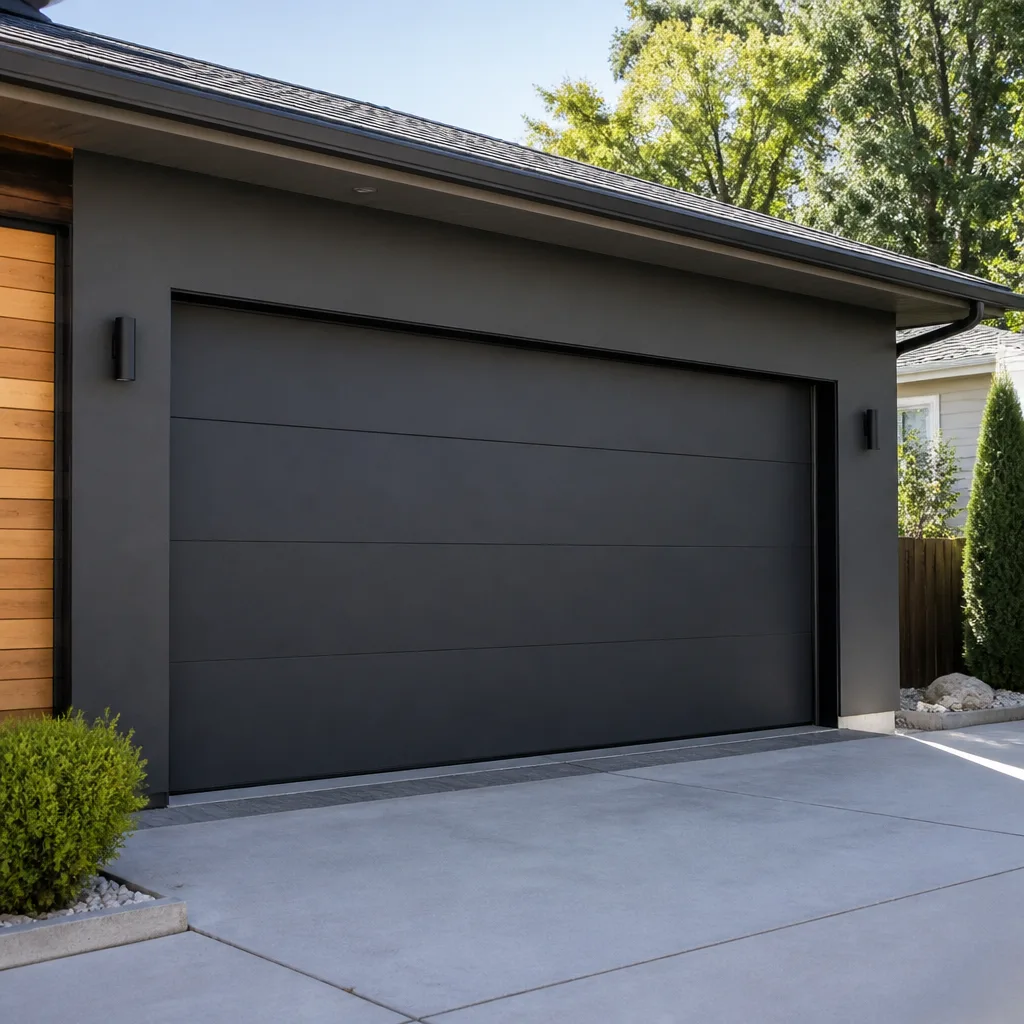 Modern flush
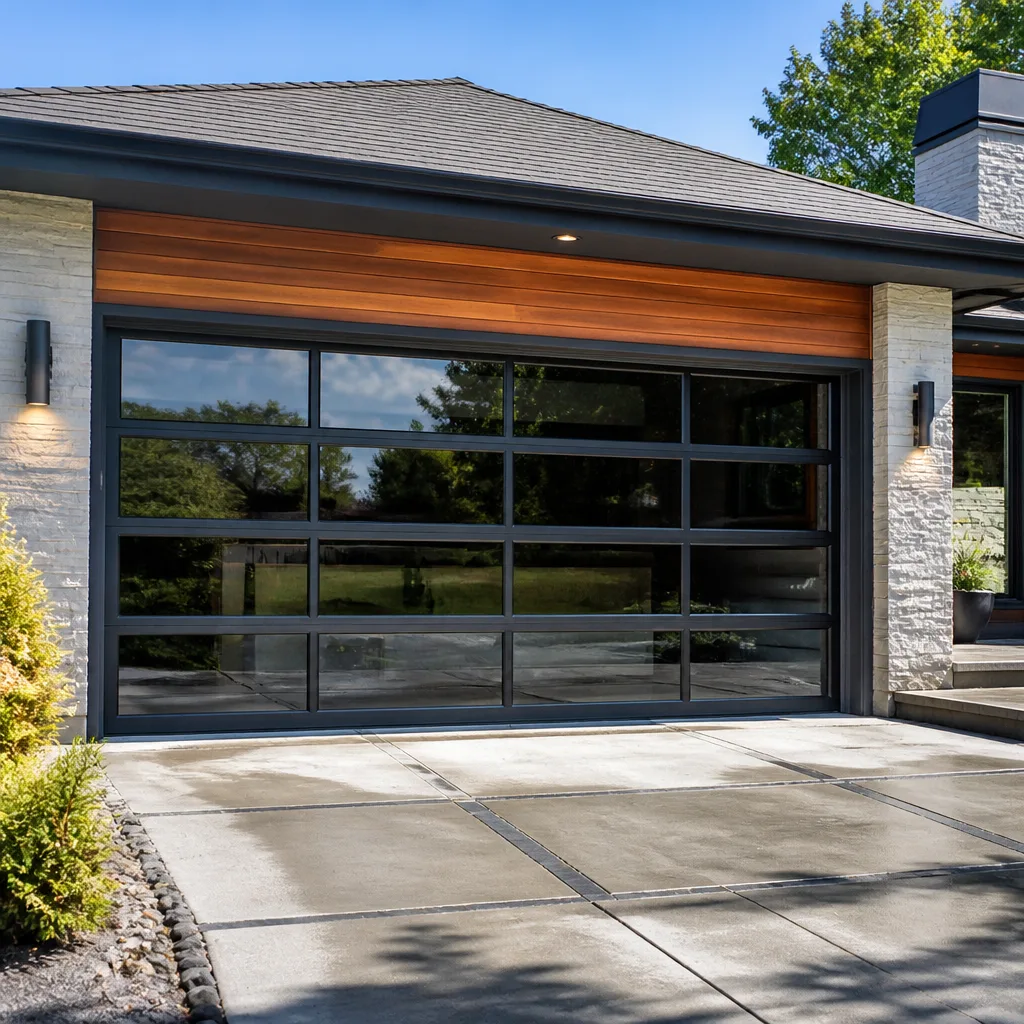 Full-view glass
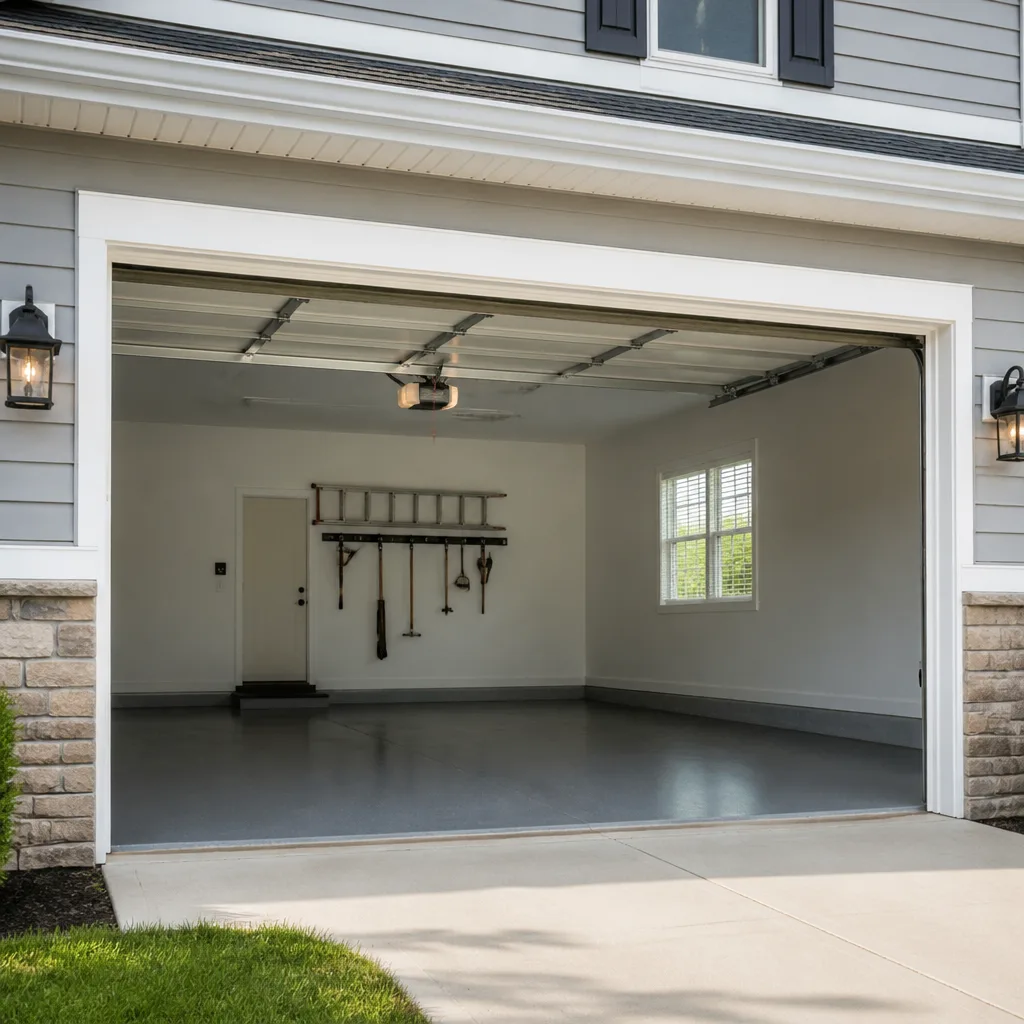 LiftMaster openers
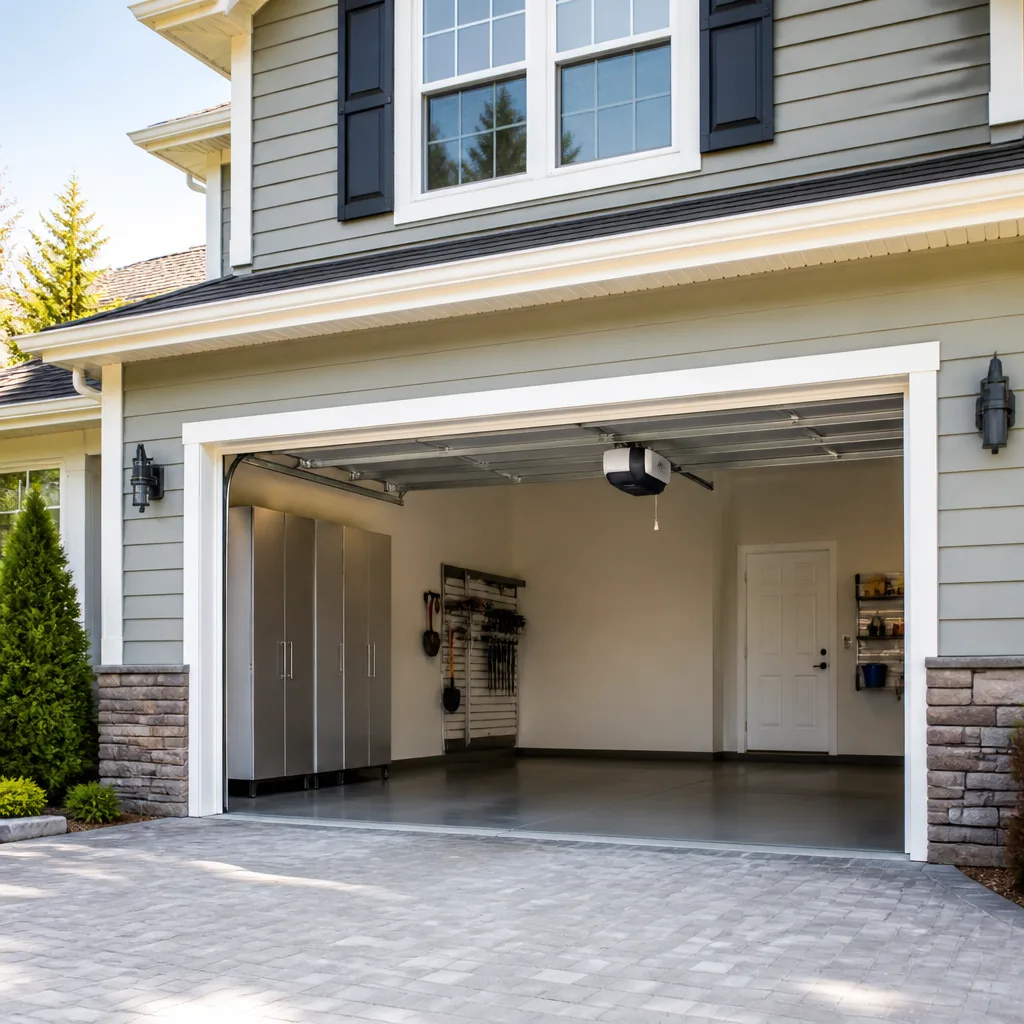 Chamberlain openers
Full 25-point door and opener safety check with every visit - springs, cables, rollers, tracks, and your LiftMaster or Chamberlain opener included
You get a price before we start. It does not change when the pro arrives.
Get your free estimateThe Complete Guide to Garage Doors in Tallahassee
Most garage door guides are written for a generic American homeowner. Tallahassee sits in a wind zone and a humidity band that disqualifies half the advice you’ll find online. A door that makes sense in Phoenix or Denver may not pass a Leon County inspection here, and a steel panel that lasts a decade up north can start showing rust in a few Tallahassee summers. This guide is organized around those local realities: the code that governs what you can legally install, the climate that decides which materials survive, and the soil and slab conditions that quietly determine how long your tracks and seals hold up. By the end you’ll know what to buy, what to check, and when to call a specialist.
Quick Answer
Garage doors in Tallahassee need to meet Florida wind-load requirements, resist year-round humidity, and be anchored to slabs and headers that vary widely by home age. Choose a reinforced steel or insulated door rated for the local wind zone, insist on hot-dipped galvanized hardware, and have springs and openers serviced by a specialist who knows the brand you already own. If your door is failing, call (855) 789-6528. We answer 24/7. Fast dispatch from 7am to 7pm, Sunday through Friday.
Styles & brands we work with
- Raised-panel steel
- Carriage house
- Modern flush
- Full-view glass
- LiftMaster openers
- Chamberlain openers
Table of Contents
- How Florida Wind-Load Rules Decide Which Doors You Can Install
- Why Steel Doors Rust Faster in Tallahassee’s Humidity
- What Big-Box Installers Stock vs. What Performs Here
- How Local Soil and Slab Conditions Affect Tracks and Seals
- A Decision Framework by Home Age
- Springs and Openers: The Parts That Actually Fail
- A Monthly and Seasonal Check List
- Choosing a Door: Materials Compared
How Florida Wind-Load Rules Decide Which Doors You Can Install
Wind-load requirements are the first filter on any garage door replacement in Tallahassee, and they’re the part most homeowners don’t know about until an installer brings it up. Florida’s building code assigns design wind speeds by region, and Leon County falls into a zone where garage doors must be rated and labeled for a specific wind pressure. The rating isn’t a marketing claim; it’s a tested value printed on the door or its label. If the label doesn’t match what your permit requires, the door can’t legally be installed on a permitted job.
The practical consequence: you can’t simply pick the door you like from a catalog and assume it’s fine. Ask these questions before you buy:
- What design pressure does this specific door carry, and is it labeled? A door rated for a lower wind zone is not the same product as one rated for a higher zone, even if it looks identical.
- Does the installed assembly meet the requirement, or just the panel? Wind-rated performance depends on the door, the tracks, the reinforcement struts, and the anchoring together.
- Will the work require a permit, and what does the city’s building department require for sign-off? Most structural and code-driven work does. Ask your city’s building department directly rather than relying on a general rule of thumb.
Doors from Clopay, Amarr, and Wayne Dalton are commonly available in wind-rated configurations, but the model number and label matter more than the brand name. A reputable installer should be able to show you the rated product data before you commit. This is exactly the kind of detail we check on every installation, because a door that fails inspection is a problem for you, not the salesperson.
For homeowners near the coast (Leon County’s southern edge sits closer to the Gulf’s influence than the northern neighborhoods), the adjacency to high-velocity wind zones makes it worth confirming rated hardware and proper anchoring regardless of what a previous installer did. If you’re unsure whether your current door is compliant, a professional inspection is the fastest way to know. See our garage door installation page for how the process works start to finish.
Why Steel Doors Rust Faster in Tallahassee’s Humidity
Tallahassee’s humid subtropical climate means high moisture in the air for much of the year, and that changes how fast steel doors corrode compared with the timelines printed in manufacturer brochures. A door sold in a dry market may advertise years of finish life that simply don’t translate here. The moisture, combined with warm temperatures, accelerates oxidation at fasteners, seams, and the bottom edge where water collects.
What holds up in North Florida:
- Heavier steel gauges. A thicker panel resists dents and gives coatings more material to bond to. Thin-gauge steel is more prone to edge rust and denting.
- Proper coatings, applied well. Factory baked-on finishes from established manufacturers generally outperform field-applied paint, but the edges and drilled holes are where rust starts regardless.
- Galvanized or stainless fasteners and hinges. Cheap plated hardware is often the first thing to rust. Ask what the hinges, rollers, and track brackets are made of.
- Insulated or composite options. Insulated steel doors with a bonded back panel protect the interior face from condensation. For openers and connected systems, brands like Chamberlain and Genie fit neatly with this kind of door, and we service both.
Another humidity reality: condensation forms on the coldest surfaces, and the bottom panel of a garage door is often the coolest. That makes the bottom seal and the lower hinges the first rust points. Replacing a worn bottom seal promptly isn’t cosmetic housekeeping; it keeps water from wicking into the panel edge. If you’re noticing rust streaks, that’s worth a look before it spreads. Our team can assess whether a panel is salvageable or ready for replacement as part of routine garage door repair.
What Big-Box Installers Stock vs. What Performs Here
Big-box stores and catalog installers typically stock a narrow set of door lines and push the product they can move in volume. That’s not a knock on the stores; it’s how retail works. The problem is that the door that moves volume nationally isn’t necessarily the door that performs in Tallahassee’s wind-and-humidity combination. You may be offered a model that’s perfectly fine in a milder market but marginal here, or a door available only in a configuration that doesn’t match your home’s structural situation.
The gap shows up in a few places:
- Wind rating availability. Not every line a retailer stocks comes in the rated configuration your permit requires.
- Hardware quality. Volume retail doors sometimes ship with lighter hardware than a specialty install would specify for humid climates.
- Fit to your opening. A stock size that’s close but not right can create sealing problems that show up later as drafts, water intrusion, and premature seal wear.
We work across eight major garage door and opener brands – LiftMaster, Chamberlain, Genie, Clopay, Amarr, Wayne Dalton, Craftsman, and Raynor – which means the right door and opener for your home isn’t limited to whatever one supplier happens to carry. Multi-brand capability is a practical advantage, not a slogan: it lets us recommend the material, gauge, and rating that fit your structure and your climate instead of steering you toward a single product line. And when it comes to servicing the brand you already have, we work on it directly, which saves you from being told your system needs replacing simply because a vendor only handles one brand.
If you want the full picture on materials before you buy, our Garage Door Repair Tallahassee Pros resource covers service options and what to expect from an inspection.
How Local Soil and Slab Conditions Affect Tracks and Seals
This is the part almost no national guide mentions: the ground under your garage matters. Tallahassee’s sandy soils and the varied slab conditions across older and newer neighborhoods affect how firmly a garage door’s tracks stay anchored and how quickly the bottom seal wears. Sandy soil drains but also shifts; slabs poured decades ago may have settled or developed small cracks that weren’t a problem when new but create uneven footing now.
What that means in practice:
- Track anchoring loosens over time. If the slab has settled or the anchor points were set into marginal concrete, tracks can drift out of plumb. A door that rubs on one side is often a track-alignment issue, not a door issue.
- Bottom seals wear unevenly. A slab that’s slightly out of level or has a small heave creates a gap on one side. The seal tips over and rubs, wearing faster on one edge. That gap also lets in humid air, which feeds everything we covered above.
- Water pooling at the threshold accelerates corrosion. After heavy rain, water that isn’t draining away from the door sits against the bottom panel and seal.
The fix isn’t always a new door. Often it’s re-anchoring tracks into sound concrete, adjusting the seal, and correcting level. In some homes, the answer is a threshold seal or a different bottom-seal profile. If your door scrapes, sticks, or lets daylight through at the bottom, that’s worth a same-day look rather than a wait-and-see approach. A specialist can tell you quickly whether you’re dealing with a track problem, a slab problem, or a door that’s simply reached the end of its life.
A Decision Framework by Home Age
The right garage door decision depends heavily on when your Tallahassee home was built. The structural situation behind the garage opening changed over the decades, and the code requirements tightened alongside it. Here’s a practical framework organized by build era.
Pre-2002 Homes
Older Tallahassee homes were often built before the current wind-load emphasis, and that shows up in the framing above the garage opening. The header – the beam that spans the top of the opening – may be undersized by today’s standards, or it may simply have aged. A heavier wind-rated door can put more load on that header than the original builder accounted for. Before installing a heavier door, we assess the header and the surrounding framing. In many cases it’s fine; in some, reinforcement or an adjustment to the door selection is the smarter path. Older homes also more often have original hardware, manual or aged openers, and single springs that are overdue for replacement.
Post-Code-Revision Homes
Homes built after the code revisions generally have framing and anchoring designed with wind-load requirements in mind, which gives you more door options and fewer structural surprises. But “built to code” at the time doesn’t mean the hardware has held up. Openers and springs still wear, and the original installation may have used hardware that’s since aged in the humidity. The advantage for these homeowners is flexibility: you can choose a heavier, better-insulated door without worrying much about the structure behind it, and you can often move straight to a modern smart-connected opener from a brand like LiftMaster or Genie without structural work.
How to Use This Framework
- Identify the build era by checking your property records or asking your city’s building department.
- Have the header and framing assessed if you’re in a pre-2002 home and considering a heavier door.
- Confirm what’s rated and permitted before you order anything.
- Match the opener to the door weight – a heavier insulated door needs an appropriately rated opener.
- Plan for hardware, not just panels. Tracks, springs, and hinges are where the real longevity lives.
Springs and Openers: The Parts That Actually Fail
When a garage door stops working, it’s almost always a spring or an opener, rarely the door itself. Understanding these two components will save you from misdiagnosing a problem and buying more than you need.
Springs. Springs are the most dangerous part of your garage door. They store tremendous energy, and they do the heavy lifting of the door every time it opens. When a spring breaks, the door may become impossible to lift, or may drop suddenly. This is not a do-it-yourself job – the stored energy in high-tension springs and cables can cause serious injury, and we recommend a trained professional every time. We offer spring repair as a dedicated service because it’s the most technically demanding part of the trade, and it’s where a generalist handyman service is most likely to fall short.
Pricing for spring work depends on the door, the spring type, and whether the job involves one spring or a matched pair. A written estimate sets the final price, and the estimate is free. If you need garage door opener repair rather than spring work, the diagnostic process differs, but the principle holds: you get a quoted price before any work begins.
Openers. Modern openers – especially the Wi-Fi and app-connected models from LiftMaster (MyQ), Chamberlain, Genie (Aladdin Connect), and Craftsman – have their own failure points: worn gears, stripped drive sprockets, failed logic boards, and connectivity issues. If you already own a smart opener, we work on it directly rather than pushing a replacement. Our technicians have up to 14 years of experience with these systems, which matters when the fix is a specific board or gear rather than a whole new unit.
If your door won’t open at all, that’s a security and access problem. Emergency garage door service is part of what we do, not a premium add-on. Call (855) 789-6528. We answer 24/7. Fast dispatch from 7am to 7pm, Sunday through Friday.
A Monthly and Seasonal Check List
A little routine attention goes a long way in a humid climate. Here’s what to check and when:
Monthly
- Listen for changes. New squeaks, grinding, or a door that hesitates mid-travel are early warnings.
- Check the bottom seal. Look for gaps, cracks, or a seal that’s tipping over on one side. Fix it before it wears through.
- Look at the hinges and rollers. Any rust streaks mean the hardware is aging faster than the door.
- Test the safety reverse. The door should reverse when it meets an obstruction – this is a safety feature worth confirming.
Seasonal
- Before and after the rainy season. Clear debris and check that water drains away from the door. Standing water at the threshold is the enemy.
- Check the track alignment. Tracks should be plumb and parallel. If the door rubs on one side, get it looked at.
- Inspect the spring. A spring with a visible gap means it’s broken or breaking; do not attempt to fix it yourself.
- Test the opener’s response. If it hesitates or the remote stops working, the problem is often a battery, a sensor, or a worn gear – all fixable.
This is also the point where a professional inspection earns its keep. A trained technician sees things an untrained eye misses, especially when it comes to spring wear and track anchoring. If anything on this list looks off, a quick call beats waiting for it to fail.
Choosing a Door: Materials Compared
What you choose depends on your home, your budget, and how much you care about insulation and longevity. Here’s an honest comparison for the Tallahassee climate:
- Steel. The most common choice. Durable, affordable, and available in wind-rated configurations from Clopay, Amarr, and others. The catch is corrosion: thinner gauges rust faster here, so choose a heavier gauge and galvanized hardware, and keep the bottom seal and panel edge dry.
- Insulated steel. A bonded back panel helps with temperature control and condensation. A solid choice for homes where the garage shares a wall with living space.
- Aluminum. Light and rust-resistant, which matters in humidity, but less impact-resistant than steel. Best for low-traffic doors or decorative glass-panel designs.
- Wood. Beautiful, but demanding in a humid climate. Wood expands and contracts with moisture and needs regular finishing to hold up in North Florida air.
- Composite and other modern materials. Increasingly available and worth asking about, especially if rust and maintenance are your main concerns.
Whatever you choose, the installation quality matters as much as the material. A well-installed mid-range door outperforms a poorly installed premium one. That’s why we measure, order, and schedule rather than promise same-day installation – a new door is a measured job, not a quick fix. If you’re ready to talk about a new door, our garage door installation page lays out the process.
Common Mistakes to Avoid
- Buying a door without confirming its wind rating. A door that isn’t rated for your zone can’t legally pass inspection, no matter how good it looks. Check the label before you buy.
- Choosing on price alone. A cheaper thin-gauge door may rust and dent faster in Tallahassee’s humidity. Weigh gauge, coating, and hardware – not just the sticker price.
- Trying to fix a broken spring yourself. The stored energy in high-tension springs and cables can cause serious injury. This is a job for a trained professional, always.
- Ignoring a worn bottom seal. A cheap part that, left alone, lets humid air and water in and rusts the bottom panel. Replace it when you see wear.
- Assuming a new door automatically fixes a track problem. If the slab has settled, a new door on the same tracks won’t fix the rub. Get the tracks checked.
- Bypassing the permit requirement. Most significant garage door work requires a permit. Ask your city’s building department what applies to your job.
- Calling a general handyman for spring or opener work. Garage doors are a specialty. The spring and opener systems fail in specific ways that a specialist knows how to diagnose.
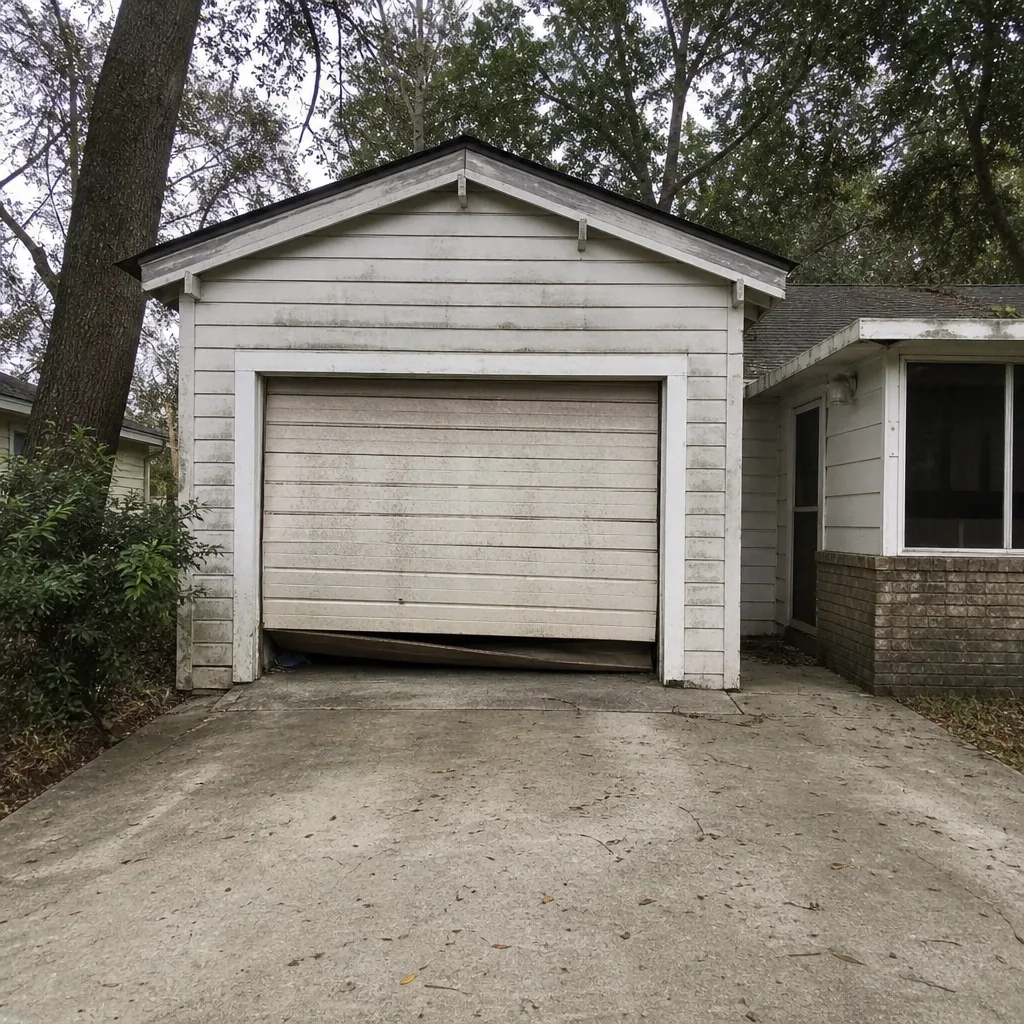
See the difference
 Before
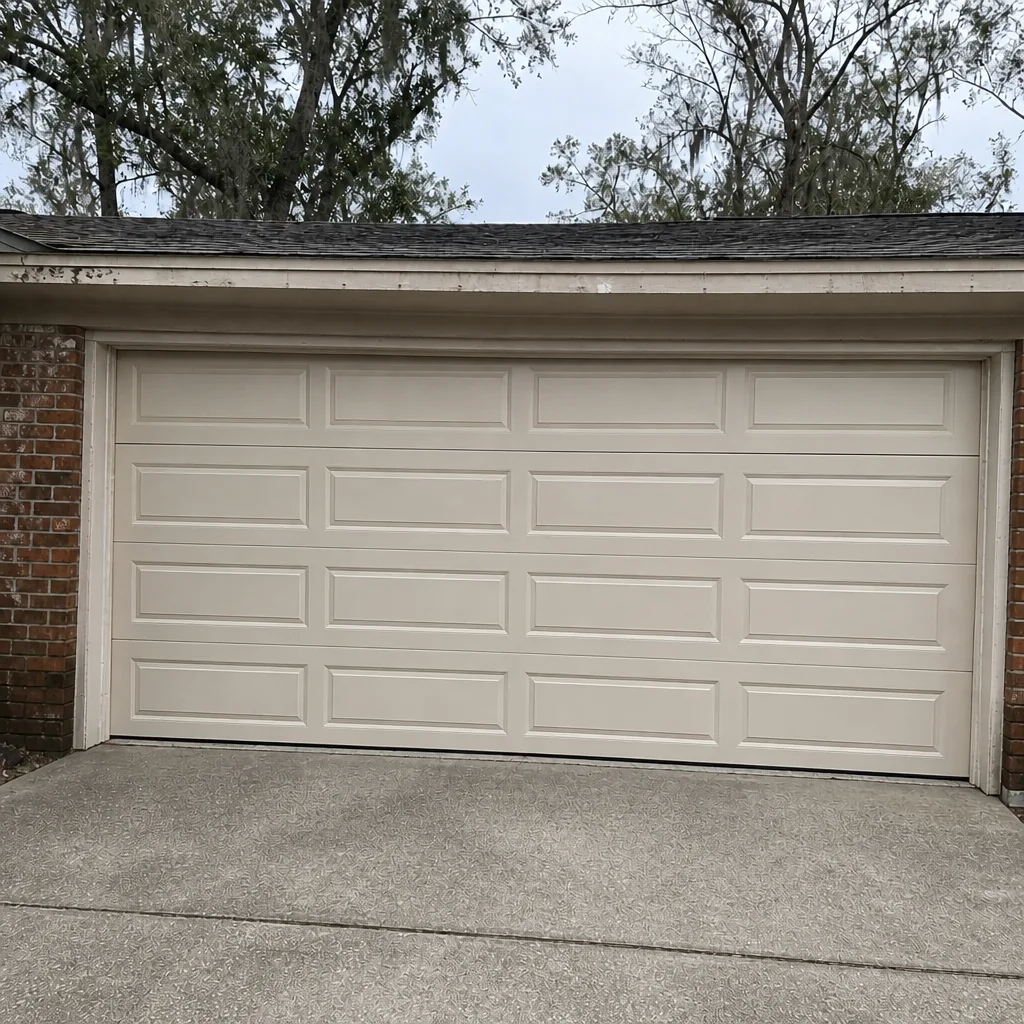 After
 Before
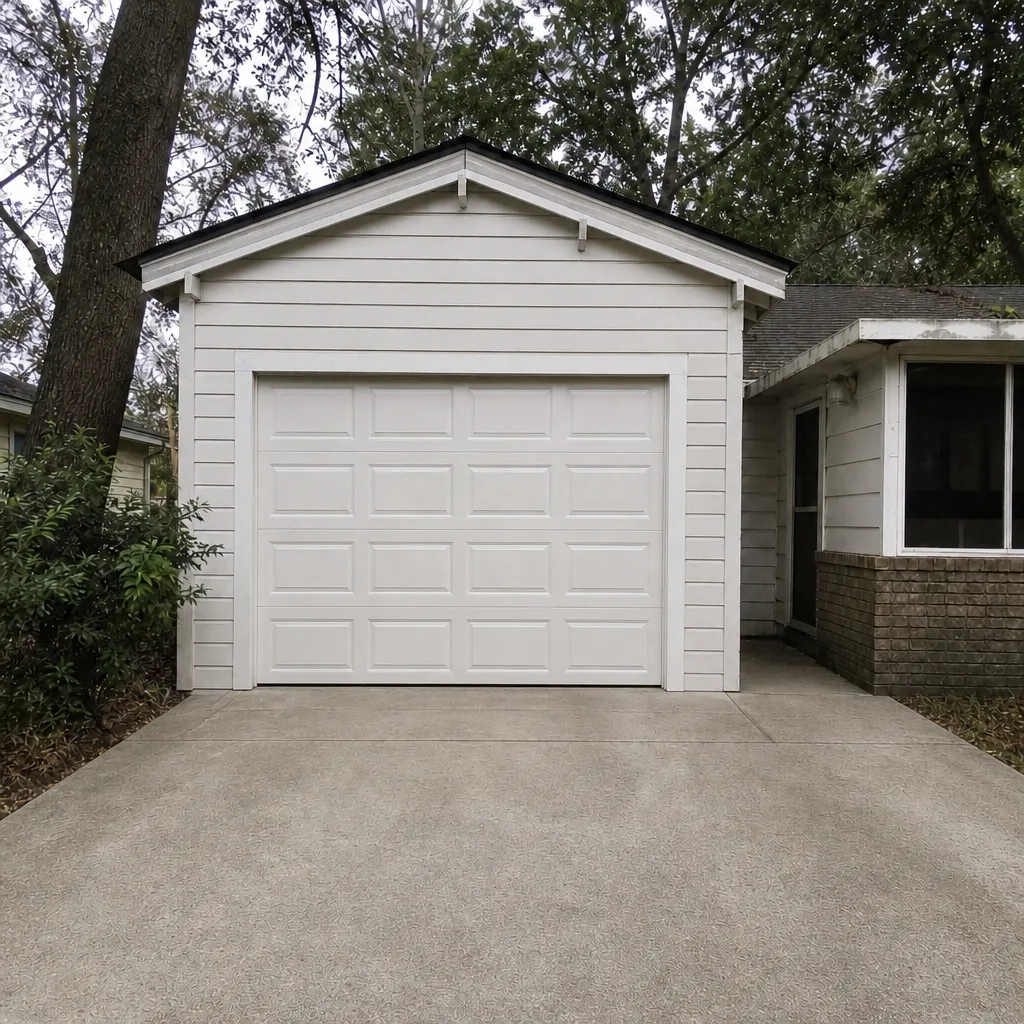 After
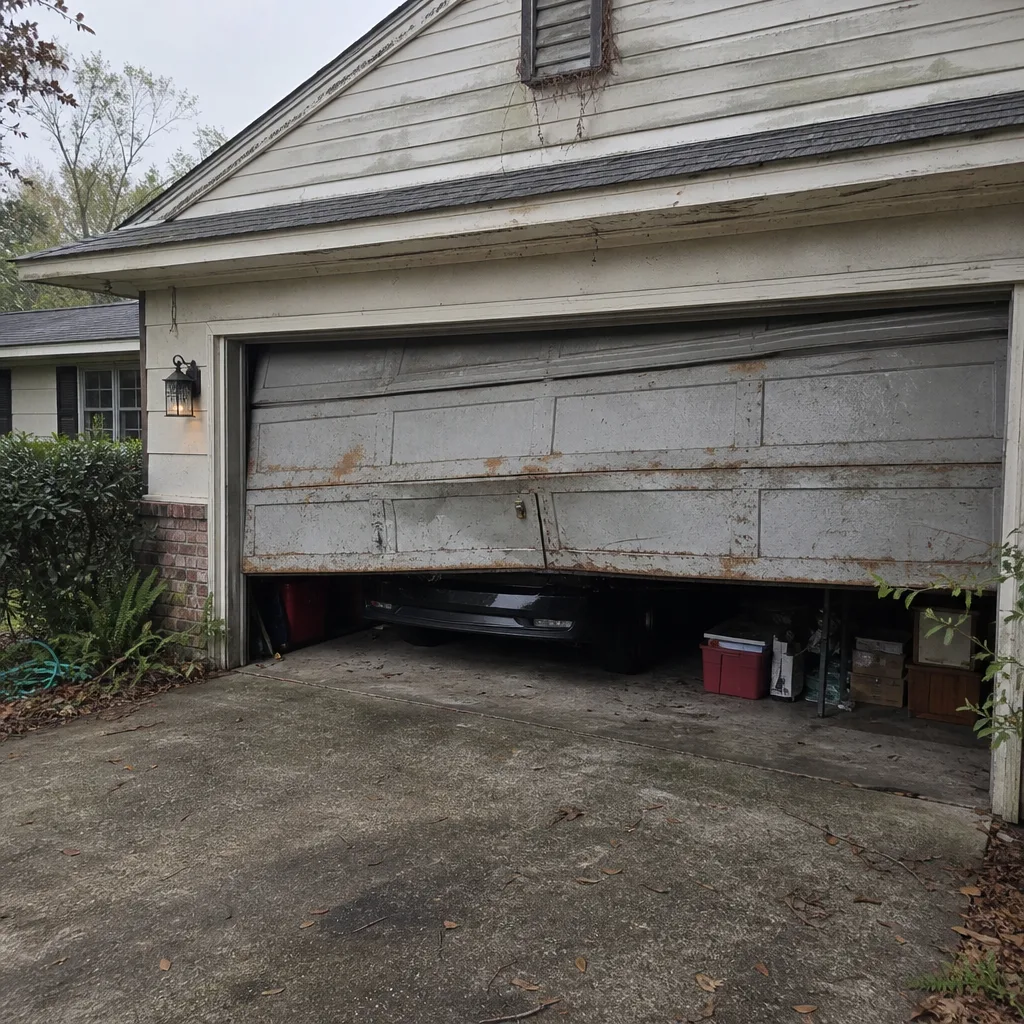 Before
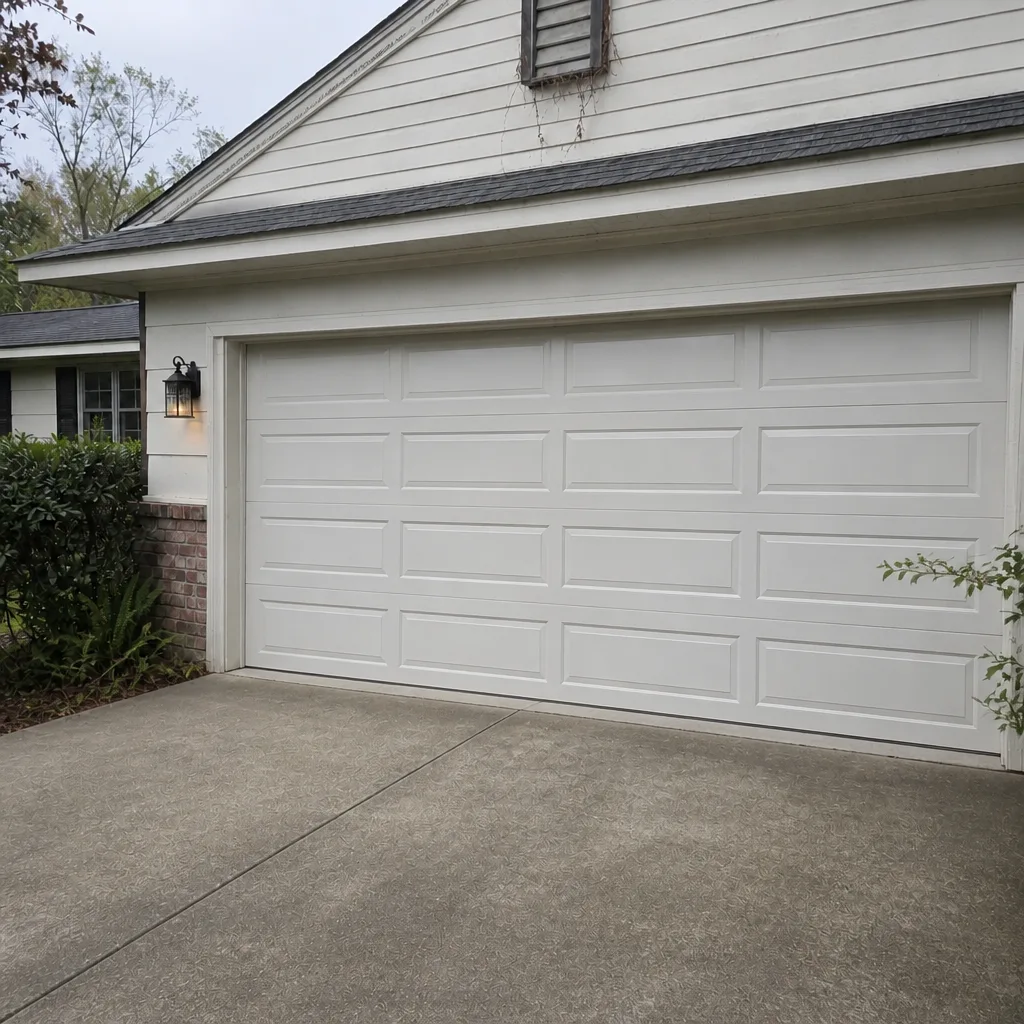 After
When to Call a Professional
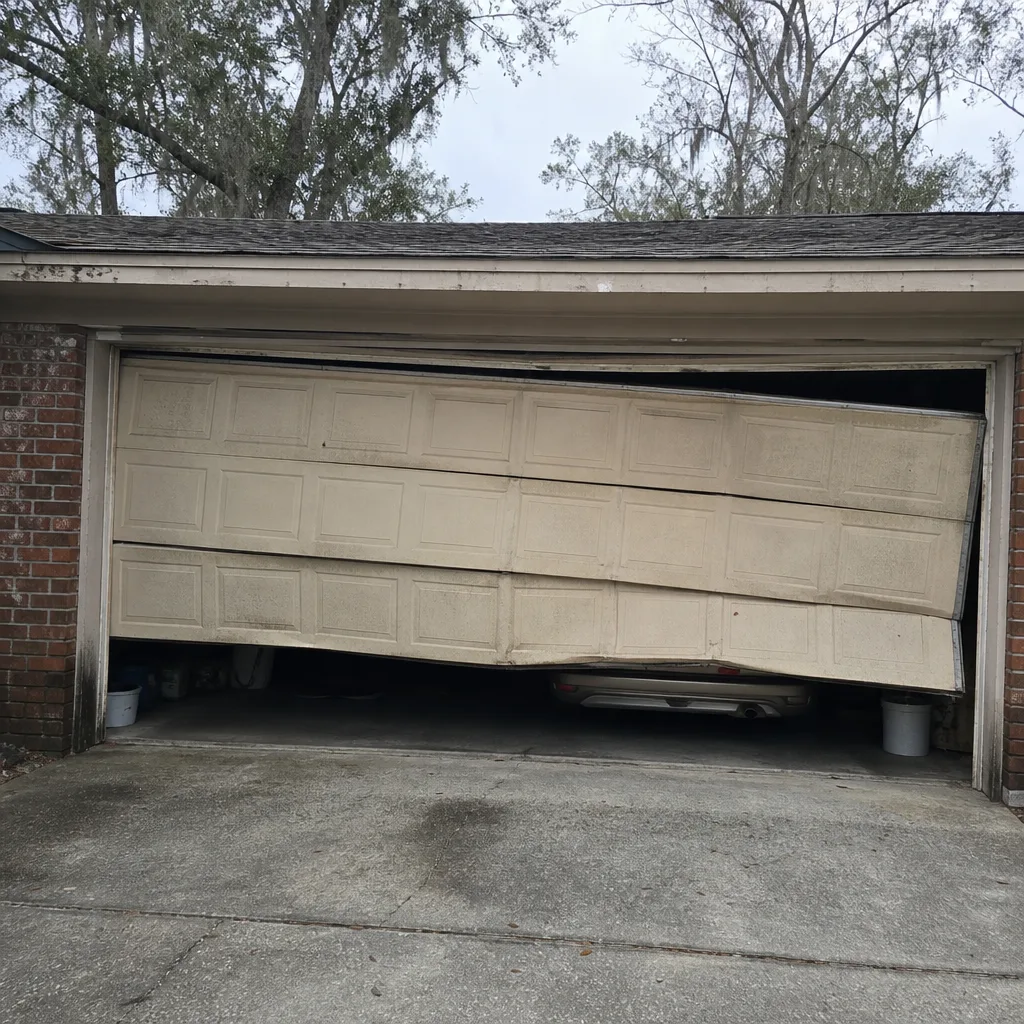
Some jobs are worth a call to a specialist. If your door won’t open or close at all, if you hear a loud snap from the spring area, if the door is crooked on its tracks, or if a spring shows a visible gap, stop and call. Don’t run the door and don’t try to fix the spring – the stored energy is genuinely dangerous. Openers that grind, hesitate, or lose app connectivity are usually fixable, and a technician who knows your brand can often tell you in minutes whether it’s a gear, a board, or a battery. Any door that shows daylight under the seal, or that scrapes one side, is worth a look before it becomes a bigger repair. Garage Door Repair Tallahassee Pros offers free estimates in Tallahassee – call (855) 789-6528.
Frequently Asked Questions
You need a door rated for the local wind zone and suited to a humid climate – typically reinforced steel or insulated steel in a heavier gauge, with galvanized hardware. Confirm the rating on the label and check what your city’s building department requires before you buy. For a specific recommendation on your home, call (855) 789-6528 for a free estimate.
Most significant garage door work requires a permit, and wind-load ratings are part of what gets checked. The exact requirement depends on your job and your city’s rules, so ask the building department directly. If you’re unsure what your installer should be providing, that’s worth a conversation with a specialist.
Springs break from metal fatigue and cycle count more than climate, but the humid air and temperature swings do speed up wear on the surrounding hardware. A broken spring makes the door unsafe to operate, so don’t run it – call a professional. Spring repair is one of our core services, so call (855) 789-6528 for a free estimate.
Yes. We service LiftMaster, Chamberlain, Genie, Craftsman, and the other major opener brands, including Wi-Fi and app-connected systems like MyQ and Aladdin Connect. You don’t need to replace a working opener just because it’s a different brand from what an installer stocks. Call (855) 789-6528 and we’ll diagnose it.
Cost depends on the job – a spring replacement, an opener repair, and a track realignment are different repairs at different price points. We give a written estimate for the specific job and set the price per job by that estimate; the estimate itself is free. Call (855) 789-6528 for an exact quote.
No, the price you agree to in writing is the price. We quote the job before any work starts, and the written estimate sets the final cost. If something unexpected comes up during the repair, we talk to you about it before doing anything. Call (855) 789-6528 to get started.
The Bottom Line
Garage doors in Tallahassee are shaped by three local forces: Florida’s wind-load requirements, the persistent humidity, and the soil and slab conditions under older and newer homes alike. Choose a wind-rated, heavier-gauge door with galvanized hardware, keep the bottom seal in good shape, and have springs and openers serviced by a specialist who knows your brand. Work across eight major brands means the right fix for the system you already own – not a sales pitch for a new one. And when the door won’t wait, emergency service is part of what we do. If anything in this guide matches what you’re seeing at home, a free estimate is the fastest way to know where you stand.
Call (855) 789-6528. We answer 24/7. Fast dispatch from 7am to 7pm, Sunday through Friday.
Written by the team at Garage Door Repair Tallahassee Pros.