
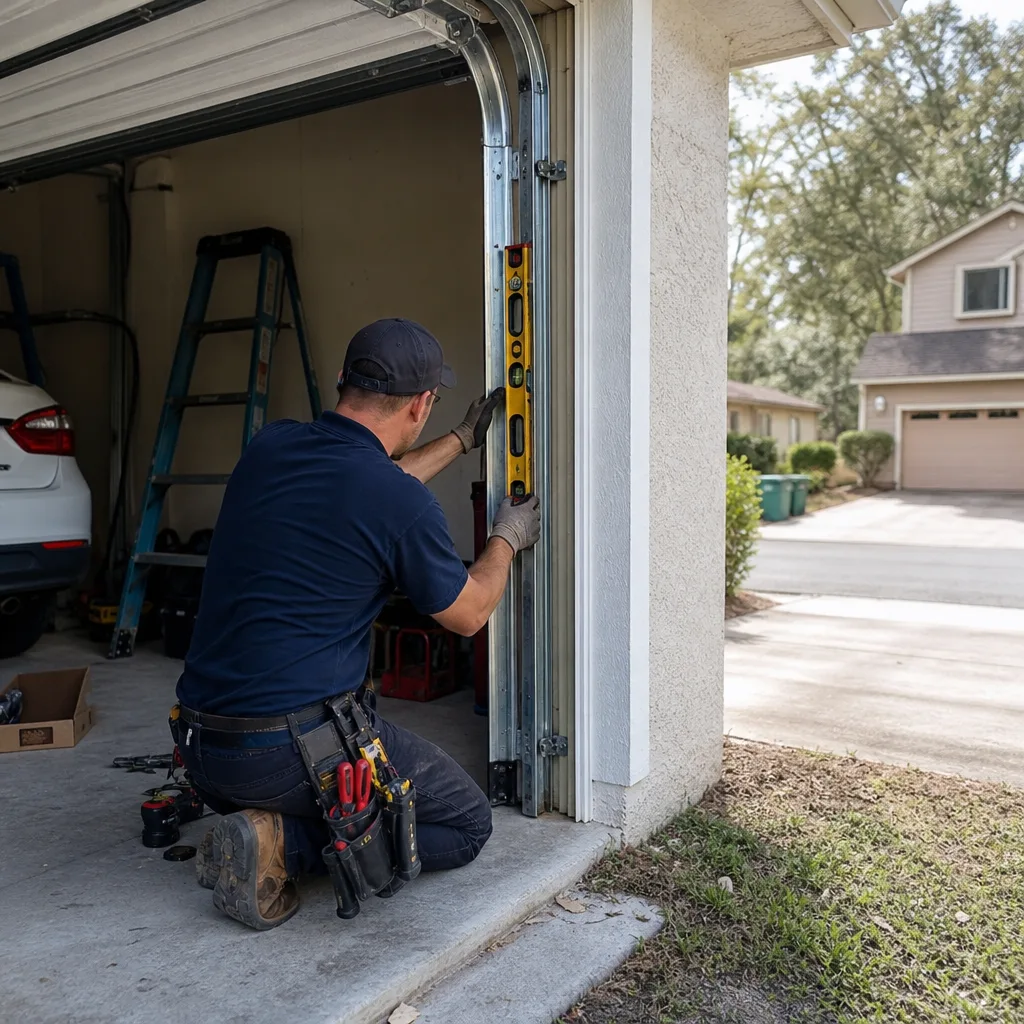
Last updated November 21, 2026
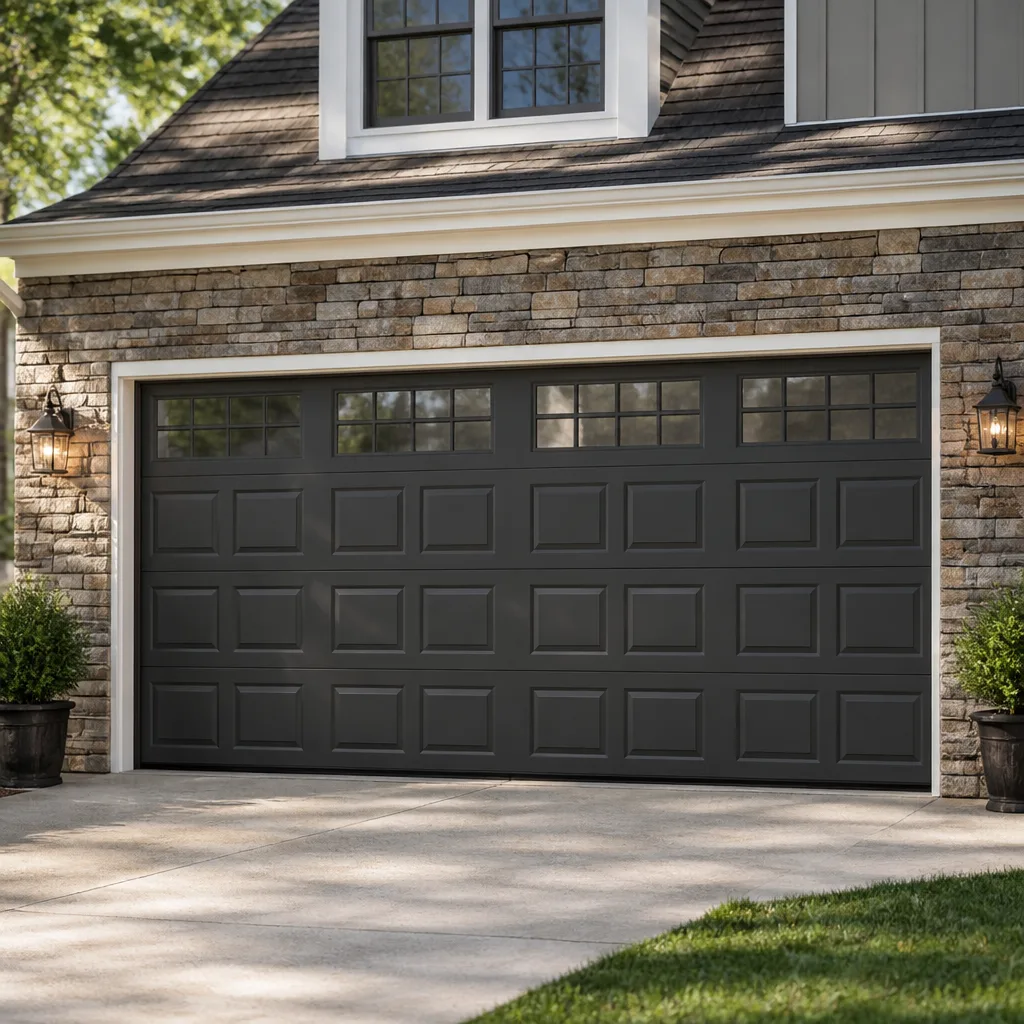 Raised-panel steel
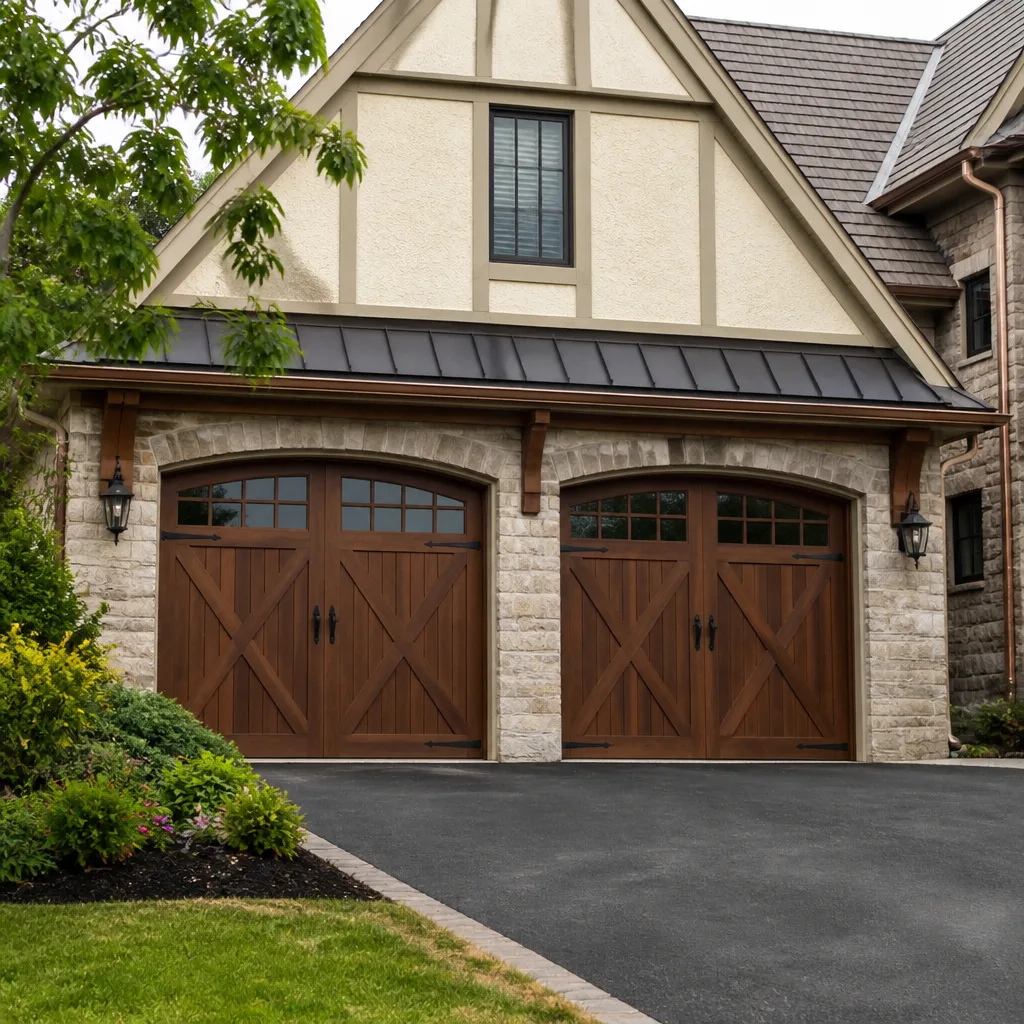 Carriage house
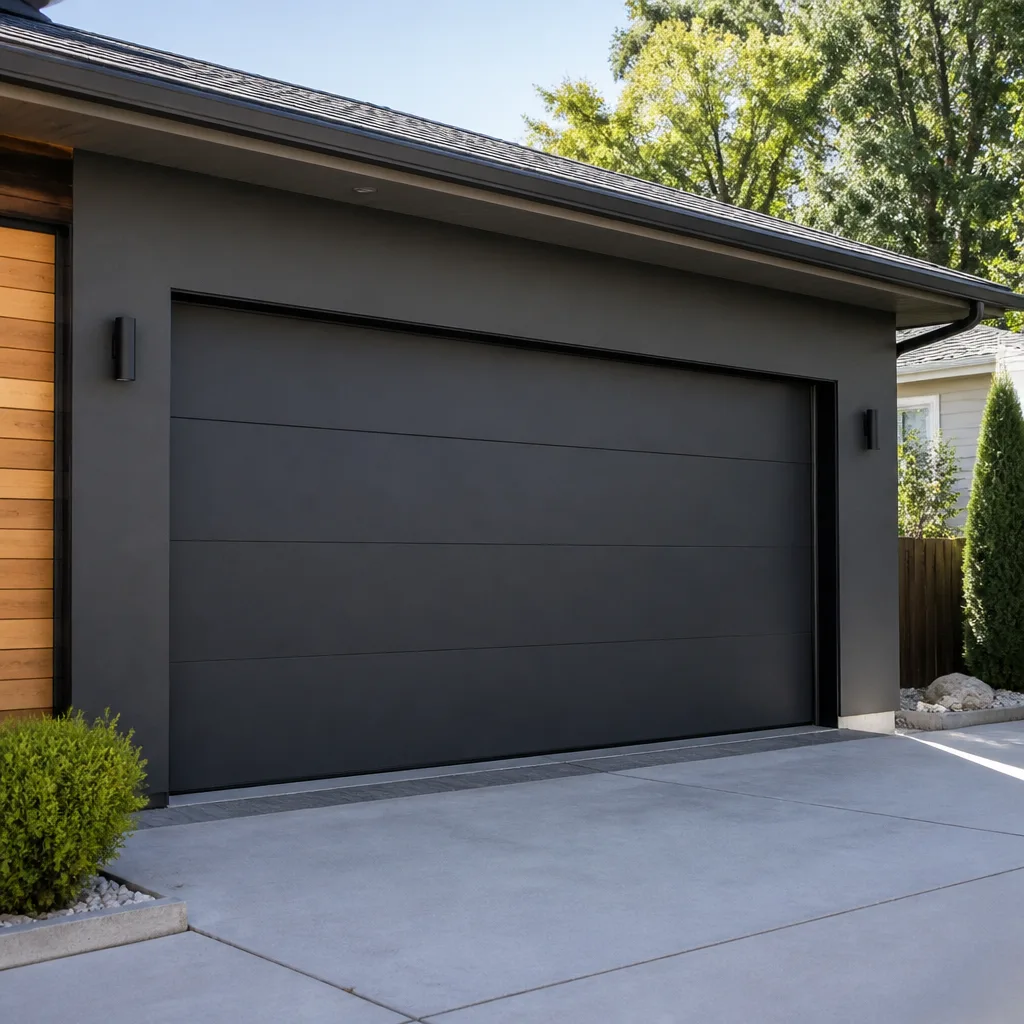 Modern flush
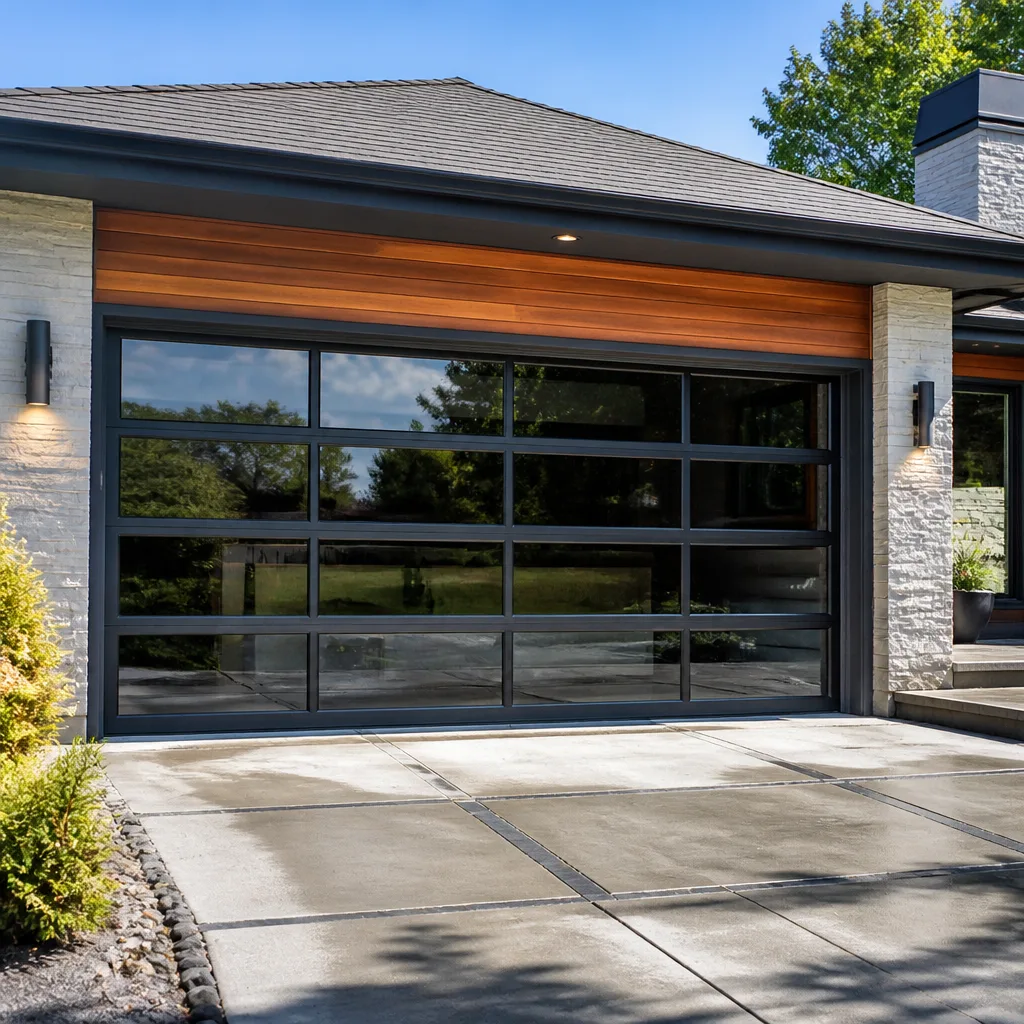 Full-view glass
 LiftMaster openers
 Chamberlain openers
Full 25-point door and opener safety check with every visit - springs, cables, rollers, tracks, and your LiftMaster or Chamberlain opener included
You get a price before we start. It does not change when the pro arrives.
Get your free estimateHow to Hire a Garage Door Contractor in Tallahassee: A Step-by-Step Guide
In Florida, almost anyone with a van and a business card can legally call themselves a handyman and take apart your garage door. That includes replacing the springs, which are the most dangerous part of the whole system. The license question is murkier than most homeowners expect, and it’s the first thing worth sorting out before anyone touches your door. This guide walks you through the vetting process a specialist would use on another contractor: which credentials actually apply here, how to check them fast, how to read an estimate line by line, and how to spot the storm-season operators who appear in Tallahassee after every named storm. We’ve seen, in our experience, which questions separate a true garage door specialist from a generalist with a ladder.
Quick Answer
Hire a garage door contractor in Tallahassee by verifying their state license through the DBPR lookup, confirming they work on your specific door and opener brand, asking for a written line-item estimate that separates labor from parts, and reading the warranty fine print before you sign. The right specialist will also tell you plainly whether your door needs a repair or a replacement. We answer 24/7, and we’re glad to walk through the vetting questions with you before you commit to anyone.
Styles & brands we work with
- Raised-panel steel
- Carriage house
- Modern flush
- Full-view glass
- LiftMaster openers
- Chamberlain openers
Table of Contents
- Why a Specialist Beats a Handyman for Garage Door Work
- Which Florida Licenses Apply and How to Verify Them
- Why Brand and Parts Fluency Matters More Than Price
- How to Read a Garage Door Estimate Line by Line
- Red Flags During Tallahassee Storm Season
- What a Real Warranty Should Cover
- Questions to Ask Before You Hire
- Common Mistakes to Avoid
Why a Specialist Beats a Generalist for Garage Door Work
Your garage door is the largest moving part of your house. It runs on torsion or extension springs under heavy tension, tracks that must be aligned to within fractions of an inch, and an opener that balances the whole system. A generalist handyman who handles drywall, decking and light plumbing doesn’t touch that equipment often enough to know its failure patterns, and the consequences of a mistake are serious. Nationally, garage door springs send roughly 30,000 people to emergency rooms each year, according to industry injury data. Most of those injuries happen to people who weren’t trained on the equipment.
A specialist works on doors daily. That means they recognize a worn cable before it snaps, know when a torsion spring is the wrong gauge for the door’s weight, and can tell whether an opener is failing or the door is simply out of balance. In Tallahassee, where humidity runs high through most of the year, we also see the effects of moisture on hinges, rollers and the bottom seal. A specialist checks those wear points as a matter of habit; a generalist may not know to look.
If your door has stopped working and you need fast help, you can start with garage door repair rather than guessing at the problem. What a specialist brings to the job is diagnostic judgment, not just tools.
Which Florida Licenses Apply and How to Verify Them
This is the part most homeowners get wrong, so pay attention. Florida does not issue a single, standalone “garage door contractor” license. Garage door installation and repair generally fall under either a general contractor license, which covers structural and building work, or a specialty contractor classification depending on the scope of the job. In many cases, a handyman can legally perform garage door work under Florida’s handyman exemption as long as the job stays under the statutory dollar threshold and doesn’t involve structural changes or permitted work. What that means in practice: an unlicensed person can replace your springs, and it’s legal. That doesn’t make it wise.
Here’s how to verify a contractor’s credentials in under two minutes:
- Go to the Florida Department of Business and Professional Regulation (DBPR) license lookup at myfloridalicense.com. It’s free and public.
- Search by the company’s business name or the individual’s name. You can also search by license number if they’ve given you one.
- Check three things: the license type, the status (current, delinquent, or null), and any complaint history attached to the record.
- Look at the qualifying agent field. That’s the person who actually holds the license and is responsible for the work.
If a contractor can’t or won’t tell you their license number, that’s your answer. A real specialist will hand it over without hesitation. And if the job involves a replacement or structural change to the opening, ask whether a permit is required; your city’s building department can confirm that.
Why Brand and Parts Fluency Matters More Than Price
A cheap bid on a door you already own is worthless if the contractor can’t source the right part. Door and opener brands use different spring wire gauges, different drum profiles, different track brackets and different circuit boards. A contractor who only stocks one product line will either talk you into whatever they carry or order the wrong part and come back twice. Both cost you more than the bid difference.
The right questions to test brand fluency are simple. Ask which brands they service, then ask a follow-up that requires real knowledge. For instance: “My door has a Clopay panel – can you match the profile?” or “My Craftsman opener lost its travel limits – is that a board issue or a limit switch?” A specialist answers those without hedging. We work on the brand you already have, including Clopay, Amarr, Wayne Dalton and Craftsman, along with the major opener lines, because a homeowner shouldn’t have to replace a working system to get it serviced.
Multi-brand fluency also affects timing. If a contractor has to order a spring from out of state, your door stays open for days. Ask how long parts typically take for your specific brand. The answer tells you whether they’ve actually done the work or are guessing.
How to Read a Garage Door Estimate Line by Line
Most garage door estimates look simple, which is exactly the problem. When labor and parts are bundled into one number, you can’t tell whether you’re paying $90 for a spring or $250. A legitimate estimate separate them. Here’s what a well-structured estimate for a typical Tallahassee garage door repair includes:
- The diagnostic conclusion stated in plain language, e.g., “torsion spring failed on left side; cable frayed.”
- Parts listed individually with the brand and gauge where relevant, e.g., “two matched torsion springs, 0.225 x 2 x 28.”
- Labor listed separately from parts, with the hourly rate or flat labor fee shown.
- A clear statement of what’s included and what isn’t – e.g., whether track realignment is part of the repair or a separate line.
- The total, matched to a written scope of work you’ve agreed to before anyone touches the door.
The red flag is a single-line estimate with no breakdown and no part description. That structure makes it easy to pad later, and it gives you no way to compare bids fairly. Prices on garage door work are quoted and agreed before any work starts – if you’re getting pressure to approve a number you don’t understand, slow down. Ask for the breakdown in writing. The written estimate is the price.
For a sense of the structure a real estimate follows, look at Garage Door Repair Tallahassee Pros and compare the line items to what your contractor hands you.
Red Flags During Tallahassee Storm Season
After every named storm that crosses North Florida, out-of-state crews arrive within days. Some are legitimate disaster-response contractors; most are opportunists who knock on doors with a clipboard and a story about “neighborhood damage.” They offer a quick fix, take a deposit, and leave before the warranty is tested. The specific red flags in Tallahassee’s storm-season market include:
- No physical local address on the business card or the estimate. Out-of-state operators often use a hotel or a relative’s address.
- A demand for cash up front, especially anything above a modest deposit on a large job.
- Pressure to sign today because “the price goes up tomorrow” or “we’re only in the area this week.”
- A quote with no part numbers and no brand names, just a lump sum.
- No verifiable license – run the DBPR lookup even during a storm surge, especially during a storm surge.
Storm damage to a garage door usually means panel impact, bent tracks or a door that’s come off its rollers. Real hail is uncommon in Tallahassee, so be skeptical of anyone selling “hail damage” as a category. If a door has taken impact, call a specialist who can inspect the tracks and springs before anyone tries to open it. Call (855) 789-6528. We answer 24/7, and we can dispatch a technician quickly during the busy season.
What a Real Warranty Should Cover
A warranty on garage door work is where the difference between a specialist and a fly-by-night operation shows up clearly. On spring and cable work, the warranty should cover both the parts and the labor, and it should be written down rather than promised verbally. Ask specifically who honors it – the manufacturer, the contractor, or both.
Watch for the voiding clauses. Common ones that catch homeowners include:
- “Void if the door is used more than normal” – normal use for a two-car household can mean dozens of cycles a day. That clause is too vague to be meaningful.
- “Void if the customer lubricates the door” – some warranties require professional maintenance, which means the warranty hinges on a service contract.
- “Labor not covered after 30 days” – parts warranties often run a year or more, but if labor is only covered for a month, a failed part costs you again.
- “Void if any modification is made” – note what counts as a modification, since even a new opener can trip that clause if the warranty doesn’t anticipate it.
Get the warranty terms attached to the written estimate before you approve the work. A specialist will hand it over without resistance. For installation, the warranty structure is different – ask about the door manufacturer’s warranty separately from the installation warranty – and you can review the details of garage door installation before committing.
Questions to Ask Before You Hire
Bring these to the first phone call. A specialist answers them without stalling, and the quality of the answers tells you most of what you need to know.
- Are you licensed, and what’s the license number? (Run it through DBPR while you’re on the phone.)
- Which door and opener brands do you service? Do you work on mine?
- Can you give me a written line-item estimate before any work starts?
- What’s your warranty on parts, and what’s the warranty on labor?
- How do you handle a spring replacement – matched pair or single spring? Why?
- Do your technicians have direct experience with my opener brand’s travel limits and safety reverse settings?
- If the door needs a replacement rather than a repair, will you put that in writing with options?
Most of these apply to any contractor. For opener-specific questions – Wi-Fi connectivity, MyQ setup, remote pairing – you’ll want a specialist who handles garage door opener repair, because opener board diagnostics aren’t a generic skill.
Common Mistakes to Avoid
- Hiring on price alone. The cheapest bid for a spring replacement often means a single spring swapped in place of a matched pair, or a part with no warranty. The quote should tell you which it is before you agree.
- Skipping the DBPR check. It takes two minutes and it’s the single fastest way to eliminate the worst operators. An unlicensed contractor has no qualifying agent and no complaint history to check.
- Accepting a verbal estimate. A verbal quote is not a price. It leaves you with no written scope, no warranty terms, and no recourse if the bill differs from what you remember.
- Letting a generalist touch the springs. Springs are under high tension and can cause severe injury if handled wrong. It’s not a home improvement project; it’s a safety-critical repair.
- Overlooking the door’s balance during a repair. A door that travels unevenly or runs the opener harder than it should is a door that will fail again. Ask whether the balance was checked.
- Trusting a storm-season crew with no local address. In Tallahassee, after a wind event, out-of-state crews appear fast. Verify the address and the license before a deposit changes hands.
- Ignoring the warranty fine print. A warranty with vague voiding clauses is worth less than the paper it’s printed on. Read it before the work starts, not after.
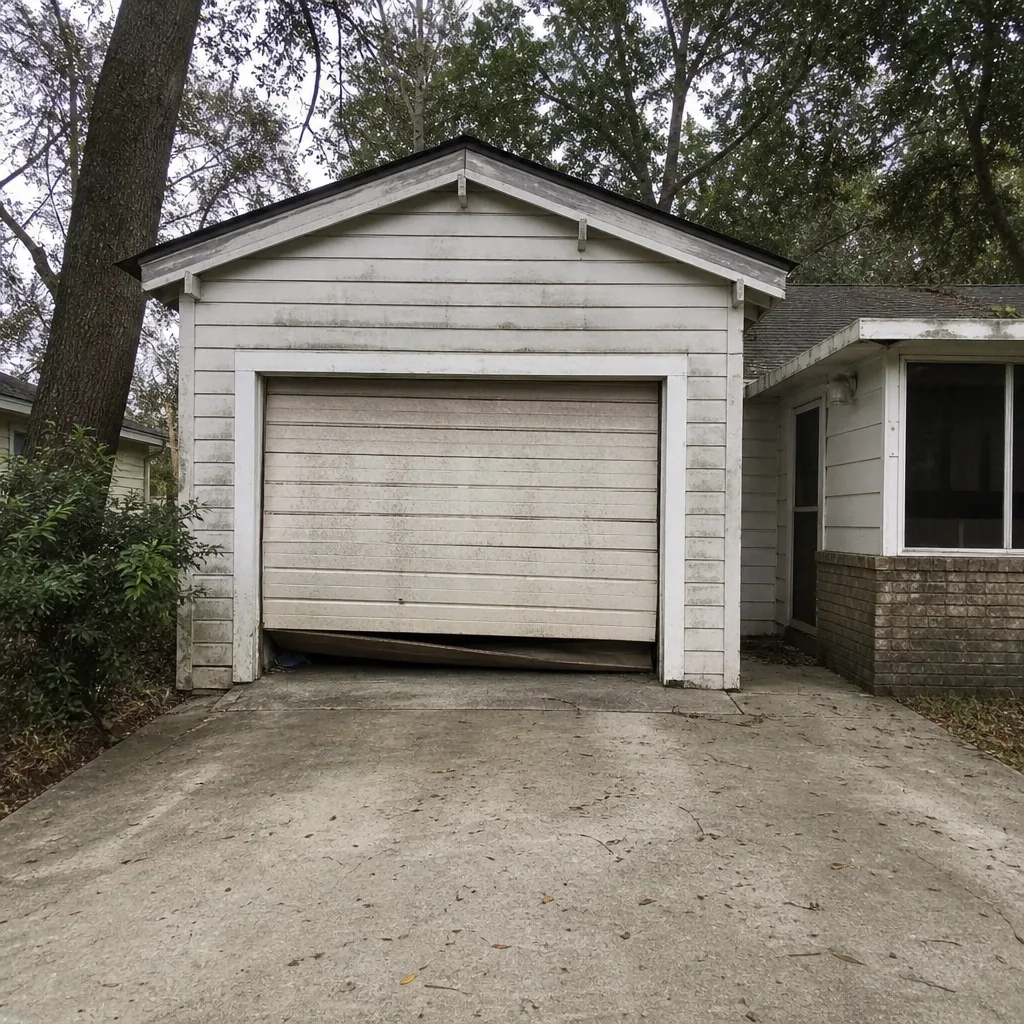
See the difference
 Before
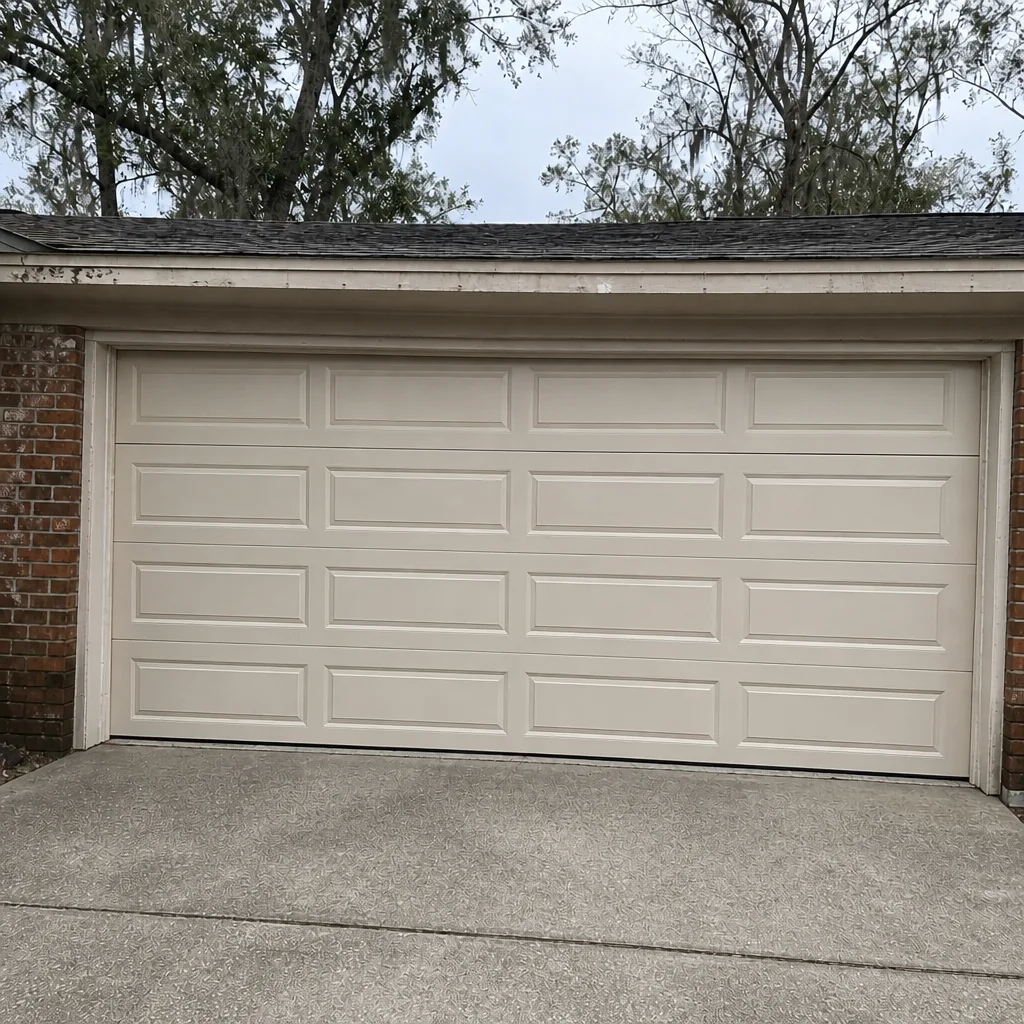 After
 Before
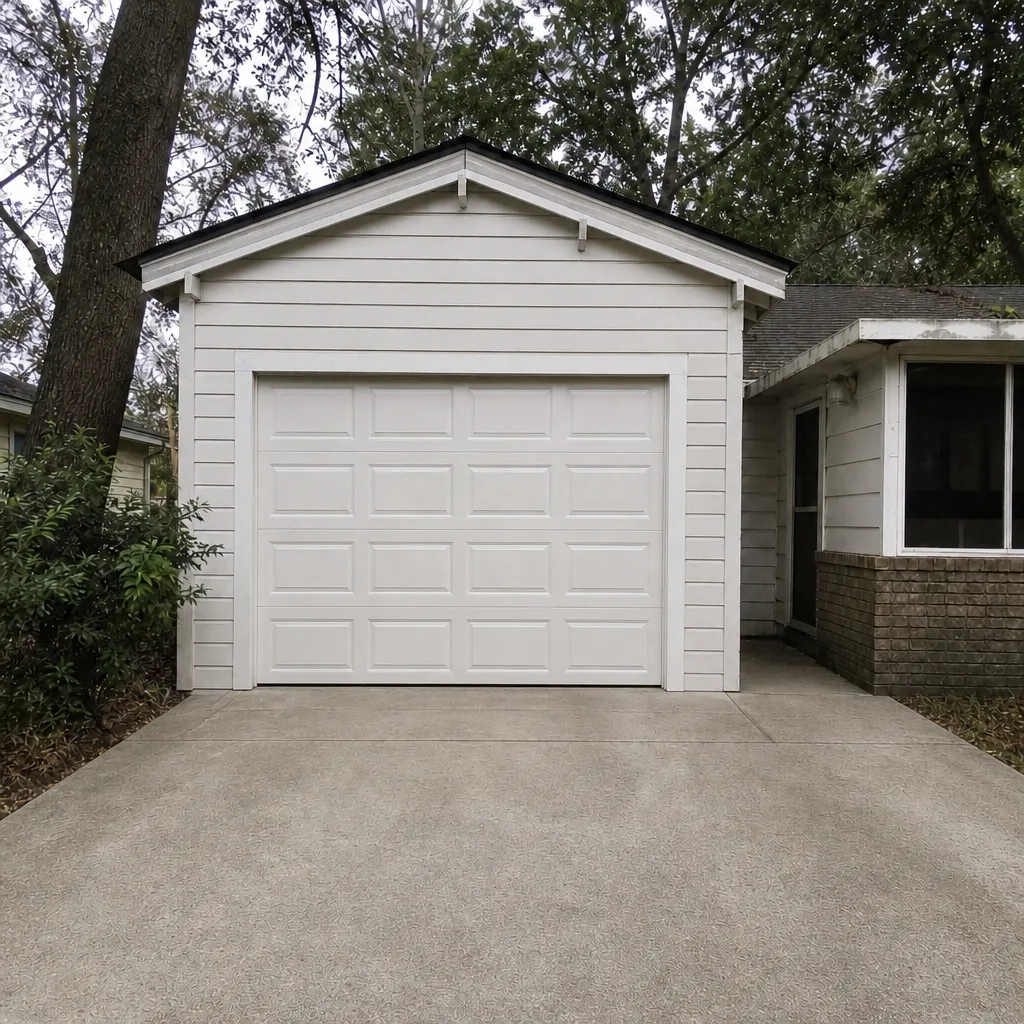 After
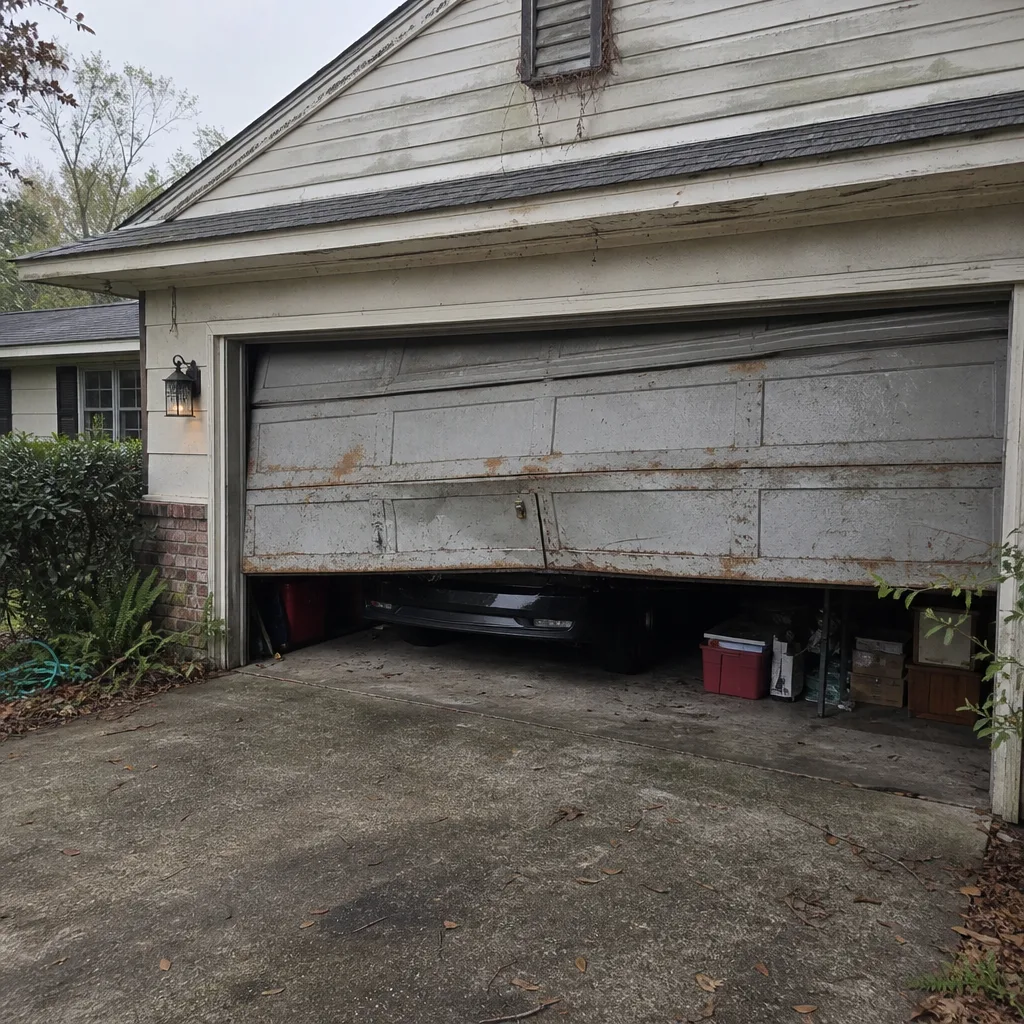 Before
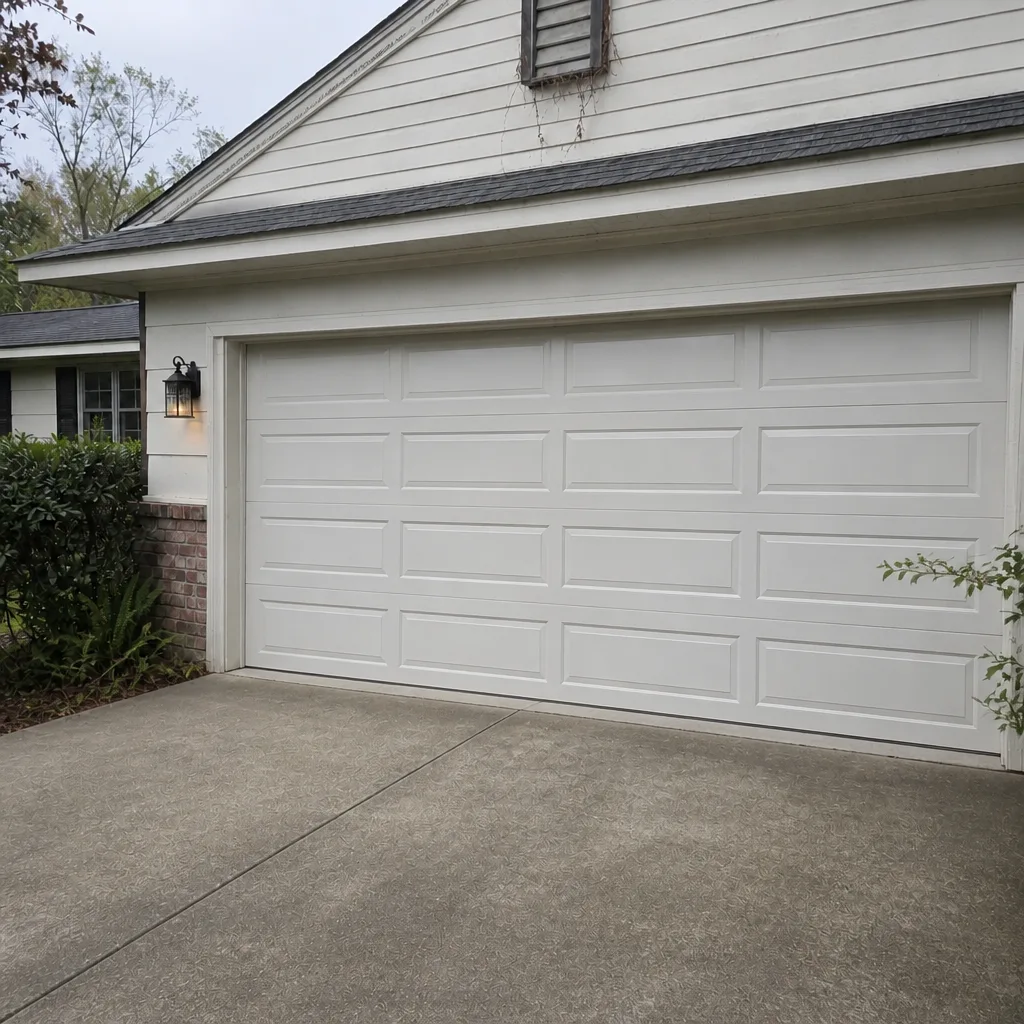 After
When to Call a Professional
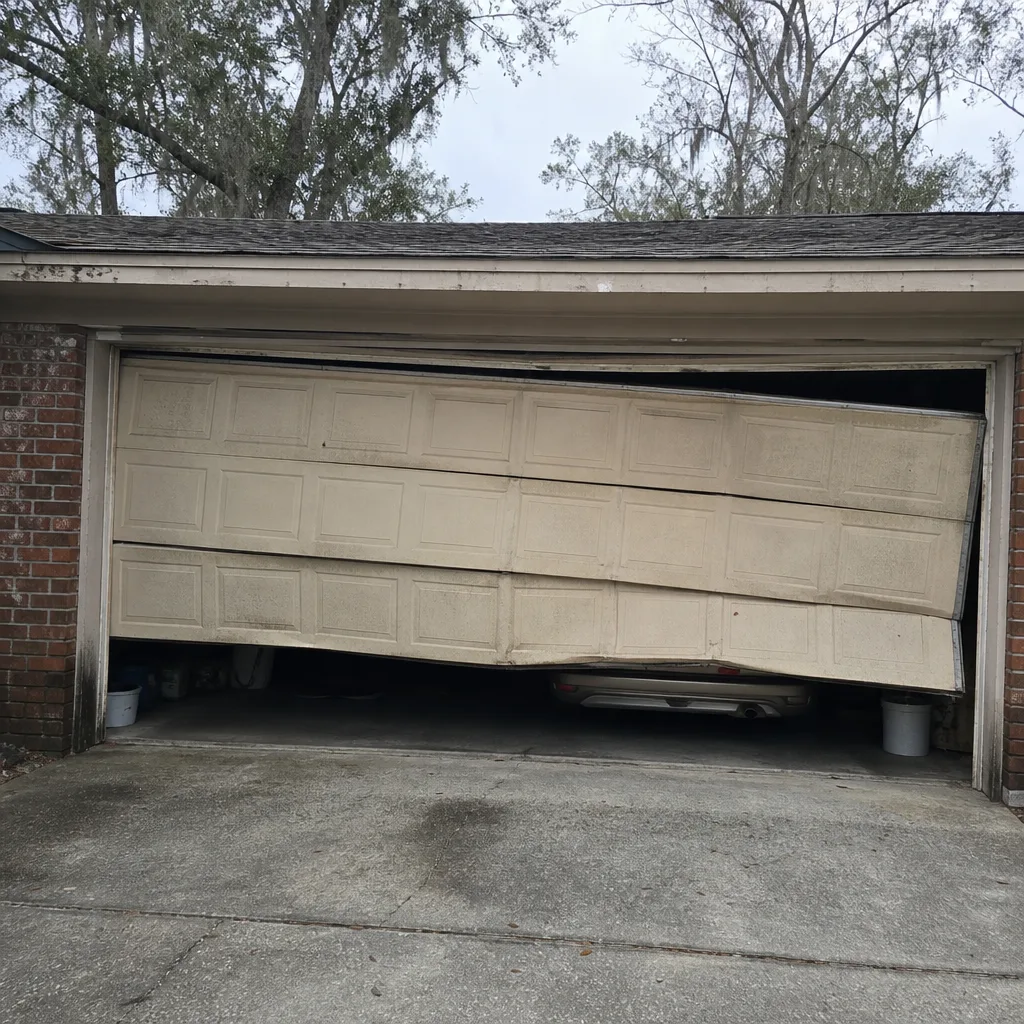
Some garage door problems are obvious – a spring breaks and the door won’t lift, the opener grinds, the door hangs crooked in the opening. Others are subtle: a door that closes a few inches, pauses, then reverses; an opener that runs but the door doesn’t move; a cable that’s frayed but still holding. Any of these is a signal to stop using the door and call someone who works on them daily. Springs are the most dangerous part of the system, and a door that’s come off its tracks can fall. Don’t operate it until a technician has looked at it.
Garage Door Repair Tallahassee Pros offers free estimates in Tallahassee – call (855) 789-6528. Call (855) 789-6528. We answer 24/7. Fast dispatch, 7am-7pm, Sunday through Friday. Our technicians have up to 14 years of experience, and the price is quoted and agreed before any work starts.
Frequently Asked Questions
Not always by law, but you should hire one anyway. Florida’s handyman exemption means unlicensed work is legal in many cases, but spring replacement is a high-tension job that causes thousands of emergency room visits nationally each year. A licensed specialty contractor carries insurance and a verifiable DBPR record. Call (855) 789-6528 for a free estimate.
Use the Florida DBPR lookup at myfloridalicense.com and search by the company or individual name. Check the license type, status and complaint history. It takes under two minutes, and a legitimate contractor will give you the license number without being asked twice. We’re glad to walk you through the check on the phone – call (855) 789-6528.
No – the written estimate is the price. A real estimate is prepared after the technician inspects the door and diagnoses the problem, and the number you agree to is the number you pay. If the scope changes because the inspection reveals something else, the technician should tell you before doing any extra work, not after. Call (855) 789-6528 for a free estimate.
In most cases, yes. Our technicians are equipped to service systems from Clopay, Amarr, Wayne Dalton, Craftsman, LiftMaster, Chamberlain, Genie and Raynor. Brand matters more than most homeowners realize, because springs, tracks and opener boards differ by manufacturer. Tell us the brand when you call and we’ll confirm parts availability before we book.
It should cover both the parts and the labor, in writing, and it should name who honors it. Watch for vague voiding clauses – too vague, and the warranty becomes unenforceable. Get the terms attached to the written estimate before approving the work. Call (855) 789-6528 and we’ll send the terms along with the quote.
Same-day service is often possible for repair calls, but it depends on the day’s schedule. Call (855) 789-6528 and we’ll tell you what’s available. We answer 24/7; a call outside dispatch hours is booked into the next opening, Sunday through Friday, 7am to 7pm. If your door is stuck partway and you can’t secure the house, tell us when you call.
The Bottom Line
Hiring a garage door contractor in Tallahassee comes down to four checks: verify the license through DBPR, confirm the contractor works on your specific brand, demand a written line-item estimate, and read the warranty before you sign. The specialist you want will answer brand-specific questions without hesitation, hand over their license number, and put the scope and price in writing before touching the door. Springs, cables, openers and tracks are not handyman work. Treat the vetting process as the most important part of the job, because it usually determines everything that follows.
Written by the team at Garage Door Repair Tallahassee Pros.